
Calorie deficit: the complete guide to losing weight
A calorie deficit is the only proven mechanism for losing fat. But between the theory (« eat less ») and reality (plateaus, muscle loss, cravings), there’s a wide gap. This guide covers everything: how much to aim for, how to build it, what to avoid — with numbers and studies.

By Adrien Grusse · Founder of Micron
Published April 27, 2026 · Updated June 14, 2026 · 13 min read
Contents
- 1. 1. Definition and physiological mechanism
- 2. 2. How much to aim for: the optimal deficit
- 3. 3. How to create a calorie deficit: the 3 levers
- 4. 4. Specifics for women
- 5. 5. Specifics for athletes
- 6. 6. The plateau: why fat loss stalls
- 7. 7. Compatibility with popular diets
- Frequently asked questions
- Scientific sources
A calorie deficit occurs when you consume fewer calories than your body expends. Over time, your body taps into its reserves — mainly fat tissue — to make up the difference. It is the only physiologically proven lever for fat loss, regardless of which diet you follow (keto, Mediterranean, intermittent fasting, etc.).
But understanding the definition isn’t enough. The real questions are: which deficit should you choose, how do you build it in real life, and how do you avoid sabotaging your results? This guide answers them in depth, with particular attention to how the strategy shifts depending on your profile (woman, man, athlete, sedentary) and the most common pitfalls.
1. Definition and physiological mechanism
A calorie deficit is the negative difference between your dietary intake (what you eat and drink) and your Total Daily Energy Expenditure (TDEE). If your TDEE is 2,500 kcal/day and you consume 2,000 kcal, you are running a 500 kcal deficit[1].
Physiologically, when intake is below needs, the body mobilizes its energy reserves. The first store used is glycogen (stored in muscle and liver), followed by fat tissue, and — if the deficit is prolonged or too aggressive — muscle tissue. That’s why a well-managed deficit must come with a high protein intake and resistance training to preserve lean mass.
The 7,700 kcal rule — and its limits
1 kg of fat tissue ≈ 7,700 kcal (≈3,500 kcal per pound): a cumulative deficit of 7,700 kcal would therefore equal 1 kg of fat lost. That’s a useful first approximation, not a law. Dynamic energy-balance models (Hall et al., 2011)[5] show it overestimates loss over the long run: the deficit doesn’t stay constant, it closes as body weight falls. Add water, glycogen and muscle mass all fluctuating on top, and the scale becomes unreadable day to day — track the average over 4 weeks.
2. How much to aim for: the optimal deficit
There is no single right number: the appropriate deficit depends on your weight, activity level, target rate of loss, and your tolerance for restriction. That said, the scientific literature converges on a healthy range: 10–25 % of TDEE — in practice 250–750 kcal/day for most adults.
- Light deficit (10–15 % of TDEE, ≈ 250–300 kcal/day): highly sustainable, ~0.25 kg/week loss, minimal muscle-loss risk. Ideal when you have specific aesthetic goals or are close to your target weight.
- Moderate deficit (15–20 % of TDEE, ≈ 400–500 kcal/day): the standard recommended by registered dietitians. Loss of 0.4–0.5 kg/week. Good balance of effectiveness and sustainability.
- Large deficit (20–25 % of TDEE, ≈ 600–750 kcal/day): appropriate for people carrying excess weight (BMI ≥ 25), and all the more relevant past obesity (BMI ≥ 30). Loss of ~0.7–1 kg/week, but requires tighter management of protein intake and physical activity.
- Aggressive deficit (> 25 % of TDEE): should only be done under medical supervision, whatever the starting BMI. Higher risk of nutrient deficiencies, muscle loss, metabolic slowdown, and hormonal disruption.
Absolute floor
Never go below 1,200 kcal/day for a woman or 1,500 kcal/day for a man without medical supervision. Below those thresholds, the risks of nutrient deficiencies, muscle loss, and hormonal disruption become significant.
Track your calories from a photo.
Snap a photo of your meal: calories, macros and 30+ micronutrients, calculated instantly.


4. Specifics for women
Women have distinct physiological needs that shape the deficit strategy. Three points deserve specific attention.
The hormonal cycle drives water retention
During the luteal phase (the week before menstruation), hormonal fluctuations often cause 1–3 kg of water retention. The scale can look stuck even though the deficit is working. Always weigh in at the same phase of the cycle for comparisons, or rely on weekly averages.
Recommended deficit ceiling: 25 % of TDEE
The deeper and longer the deficit, the more exposed women are to hormonal disruption: amenorrhea (loss of menstruation), reduced libido, sleep disturbances. This is RED-S (Relative Energy Deficiency in Sport), a well-documented syndrome among under-fueled athletes. It isn’t defined by a percentage of TDEE but by low energy availability — the energy left for the body once training has been paid for. In practice, a 15–20 % deficit of TDEE is healthier and more sustainable, and any loss of menstruation should lead to a medical consultation, not to a deeper cut.
Diet break and refeed
On long cuts (> 8 weeks), plan a 7–14 day diet break at maintenance (no deficit) every 8–12 weeks. This helps restore leptin (the satiety hormone), refresh motivation, and avoid metabolic slowdown. Science calls this metabolic adaptation — it is real and measurable.
5. Specifics for athletes
If you train regularly (3+ sessions per week), your deficit needs to be calibrated. The principles:
- Moderate deficit only (15–20 % max). Beyond that, recovery drops, performance falls, and injury risk rises. Extreme cutting is incompatible with high-quality intense training.
- High protein: 2.0 to 2.5 g/kg of body weight per day. That’s above the health minimum (0.8 g/kg) because resistance training in a deficit raises repair needs.
- Carbs centered around training: keep carb intake higher on training days (+50–100 g) and more moderate on rest days. This supports performance and recovery.
- Weekly cycling: alternate 1–2 maintenance days (no deficit) with the rest in a deficit. This approach — « calorie cycling » — is mentally easier to sustain and protects performance.
6. The plateau: why fat loss stalls
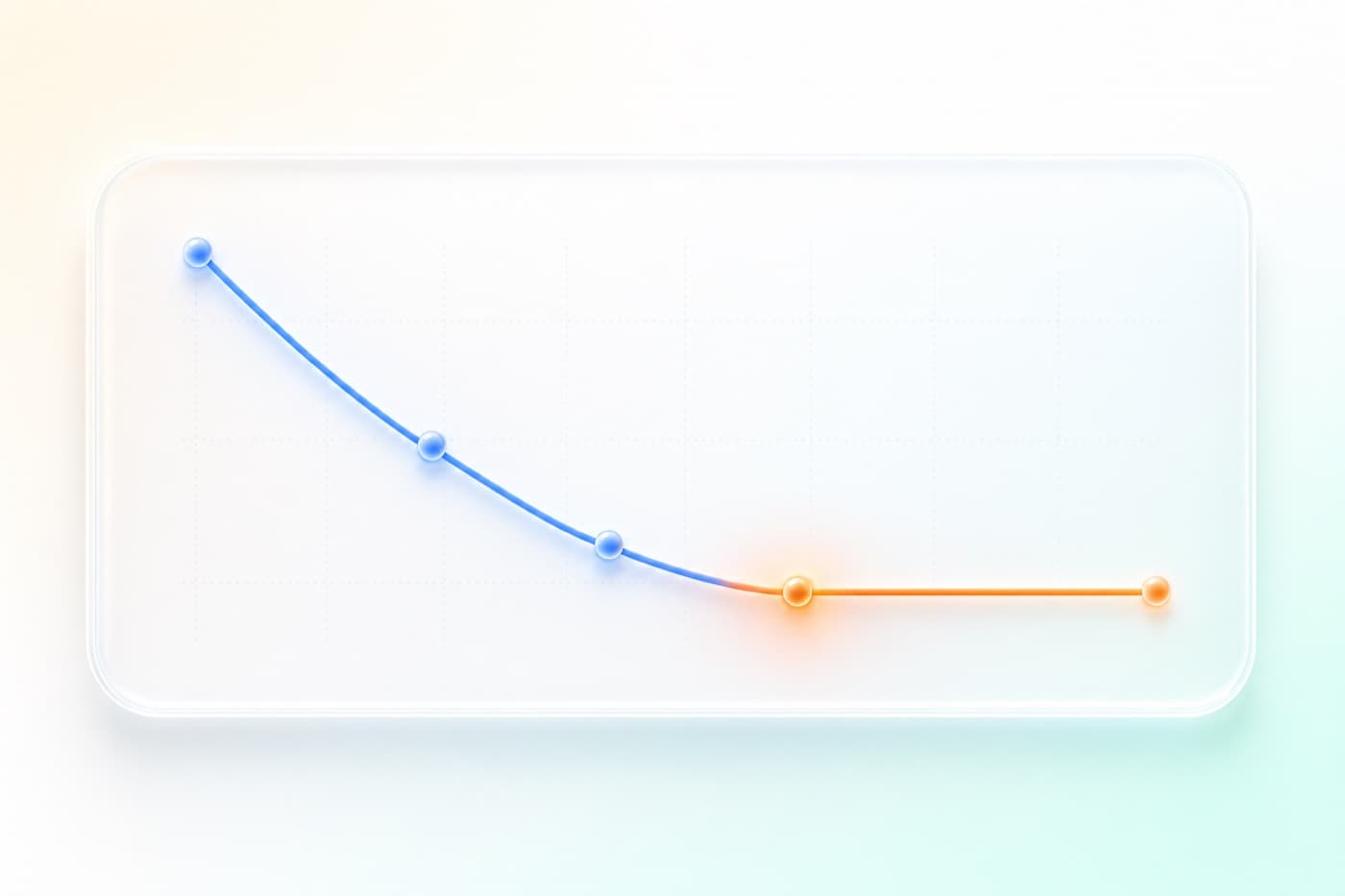
After 4–8 weeks in a deficit, almost everyone hits a plateau: weight loss slows or stops, even though the deficit appears unchanged. This is a normal physiological phenomenon driven by several mechanisms.
Metabolic adaptation
When you lose weight, your TDEE decreases mechanically (you’re lighter, so you burn less) — this is metabolic compensation[4][5]. On top of that, your body reduces its resting energy expenditure beyond what that weight loss alone predicts, in response to a prolonged deficit. In practice: a 500 kcal deficit at the start closes gradually week after week, and you need to recompute your needs rather than assume the deficit is intact.
NEAT drops unconsciously
Under calorie restriction, your body looks to conserve: you move less spontaneously, you feel more tired, you take the elevator more often. NEAT can drop 200–400 kcal/day without you noticing.
How to restart loss
- Recompute your TDEE at your new weight and adjust calories accordingly.
- Diet break of 7–14 days at maintenance to restore leptin and hormones.
- Boost NEAT consciously: target 8,000–10,000 steps/day, take the stairs.
- Refeed: 1–2 maintenance days per week with a higher carb intake.
- Audit accuracy of your calorie estimates: underestimating actual intake (portion sizes, sauces, drinks) is by far the most common cause[2].
7. Compatibility with popular diets
Every diet that produces weight loss creates a calorie deficit — that’s the non-negotiable condition. The differences between diets come down to how easy each one makes maintaining that deficit for a given person.
- Mediterranean diet: a naturally moderate deficit, rich in fiber and healthy fats. Strong long-term adherence.
- Intermittent fasting (16/8, 18/6): doesn’t create a deficit by itself, but by compressing the eating window many people spontaneously eat less. Effective when adherence is good.
- Ketogenic diet (keto): carbohydrate restriction below 50 g/day. The deficit usually emerges from a spontaneous reduction in calories (greater satiety from fats and protein). A fit for some profiles, restrictive for others.
- Moderate low-carb: 100–150 g of carbs/day with high protein. Solid compromise for many people, especially with insulin resistance.
- Strict calorie counting: the most precise method. Requires up-front discipline but yields a sharp understanding of your intake. Best for those who like data.
The best diet for you?
It’s the one you can stick to for 6+ months without excessive frustration. Trials comparing diets head to head show small gaps next to the gap between « followed » and « abandoned »: adherence decides the outcome, not the macro split.
Timeline: how long to lose 5 kg?
Indicative estimate. The first weeks usually include water and glycogen loss (2–3 kg) that exaggerates initial progress. Pure fat loss settles in afterwards at a steadier pace.

| Level | Per week | Per month | For 5 kg | Recommendation |
|---|---|---|---|---|
| −250 kcal/day | −0.23 kg / week | −1 kg / month | ≈ 22 weeks | Highly sustainable |
| −500 kcal/day | −0.45 kg / week | −2 kg / month | ≈ 11 weeks | ⭐ Recommended |
| −750 kcal/day | −0.68 kg / week | −3 kg / month | ≈ 7–8 weeks | Significant excess weight |
| −1,000 kcal/day | −0.9 kg / week | −4 kg / month | ≈ 5–6 weeks | Medical supervision recommended |
5 mistakes that sabotage a calorie deficit
The most common traps observed on forums, in clinical practice, and across the literature.
📏Underestimating your intake
A classic New England Journal of Medicine study (Lichtman et al., 1992)[2] measured, using doubly labelled water, a gap of about 47 % between reported and actual intake in people who described themselves as diet-resistant — while their energy expenditure matched predictions. The sample was small (10 people selected on exactly that profile), but the mechanism is robust and universal. The traps: cooking oil, sauces, calorie-dense drinks, eyeballed portions. Weigh your food for 2–3 weeks to calibrate your eye.
🥩Neglecting protein
In a deficit, your body taps into muscle protein if you don’t eat enough. Aim for 1.8–2.5 g/kg of body weight — 130–180 g/day at 70 kg. Without that intake, you lose muscle AND fat in roughly equal proportion — exactly what you want to avoid.
🛌Sleeping poorly
Sleep deprivation (< 7 h) raises ghrelin (the hunger hormone) and lowers leptin (the satiety hormone). A 2010 study (Nedeltcheva)[3] showed that at identical calorie intake, people sleeping 5.5 h lost 55 % less fat and 60 % more muscle than those sleeping 8.5 h.
🪑Compensating unconsciously through less NEAT
This is the silent trap: under restriction, your body conserves. You take the elevator, you move less in conversation, you sit longer. The NEAT drop can quietly eat 200–400 kcal of your deficit. Force yourself to count steps and target 8,000–10,000/day.
🎯Trying to go too fast
A deficit > 25 % of TDEE produces fast loss in the first week (water and glycogen) but exposes you to muscle loss, chronic fatigue, uncontrollable cravings, and faster weight regain when you stop. The science is consistent on this: a sustained moderate deficit produces better results at 12 months than a short aggressive one.
Track your calorie deficit from a photo.
Get your personalized calorie target in 30 seconds — BMR, TDEE, and recommended macros.
When not to follow this guide
These recommendations are for healthy adults. They are not suitable during pregnancy or breastfeeding, under 18, with a chronic condition (diabetes, thyroid disease, kidney failure) or on long-term medication. If counting calories starts to take over, causes anxiety, or leads to restriction you no longer control, stop tracking and talk to a doctor: in the US, the National Alliance for Eating Disorders helpline, 1-866-662-1235.
Disclaimer
This article is for information only and does not replace medical advice. Needs vary with age, sex and situation (pregnancy, conditions, medication): if in doubt or symptomatic, talk to a health professional.
Frequently asked questions
What calorie deficit do I need to lose 1 kg per week?
To theoretically lose 1 kg of fat per week, you would need a cumulative deficit of 7,700 kcal over 7 days — about 1,100 kcal/day. That level is rarely sustainable and not recommended for most adults: nutrient deficiency risk, muscle loss, fatigue. A loss of 0.5–0.7 kg/week from a 500–750 kcal deficit is a much healthier and more sustainable target.
What is the ideal calorie deficit for a woman?
For most adult women, a 15–20 % deficit of TDEE — roughly 300–450 kcal/day depending on profile — is the sweet spot. Beyond a 25 % deficit, the risk of hormonal disruption (cycle, sleep, libido) rises significantly. Highly active or athletic women should aim for 10–15 % to protect performance and cycle.
How many calories to lose 5 kg?
Theoretically, 5 kg of fat corresponds to a 38,500 kcal cumulative deficit. At 500 kcal/day, that’s about 11 weeks (77 days). In practice, plan for 12–16 weeks: the first week often includes 1–2 kg of water loss, and plateaus are common past weeks 4–6. A sustained moderate deficit beats an aggressive 4-week cut followed by a yo-yo.
Does a calorie deficit cause muscle loss?
Yes, without precautions: an unmanaged deficit costs you fat and muscle, and muscle’s share of the weight lost can become substantial. To preserve muscle: (1) high protein (1.8–2.5 g/kg), (2) resistance training 3–4×/week, (3) moderate deficit (≤ 20 % of TDEE), (4) adequate sleep (7–9 h). With those four conditions met, loss concentrates far more on fat mass — exactly what trials with high protein intake and maintained resistance training show.
Why am I not losing weight despite a calorie deficit?
Four main causes, in order of frequency: (1) underestimated actual intake (the most common trap — weigh your food for 2 weeks to verify), (2) water retention from cycle or stress, (3) metabolic adaptation after several weeks in a deficit (your TDEE has dropped), (4) unconscious NEAT decrease. If you don’t lose weight in 3–4 weeks, recompute your needs, audit intake, and consider a diet break.
What’s the difference between BMR and TDEE?
BMR (Basal Metabolic Rate) is the minimum energy your body burns at complete rest — just to keep your vital organs running. For a typical adult, it’s 1,200–1,800 kcal/day. TDEE (Total Daily Energy Expenditure) adds all your daily physical activity (exercise plus NEAT). The deficit is applied to TDEE — not BMR — to determine your calorie target.
Do I need to exercise during a calorie deficit?
Exercise isn’t mandatory for weight loss: the plate weighs most in the energy balance, because it’s easier to remove 300 kcal from a meal than to burn them in training. But it’s strongly recommended for two reasons: (1) resistance training preserves muscle mass (impossible without it in a deficit), (2) physical activity improves final body composition and metabolic health. The winning combo: 3–4 resistance sessions/week + 8,000–10,000 steps/day.
How long should I stay in a calorie deficit?
Until your goal is reached, but with diet breaks of 7–14 days at maintenance every 8–12 weeks. These pauses help restore leptin, limit metabolic slowdown and preserve motivation: the intermittent protocol in the MATADOR study[8] produced more fat loss and less metabolic adaptation than a continuous deficit. The longer the deficit runs without a break, the stronger the metabolic adaptation and the hormonal-disruption risk — especially in women.
Does a calorie deficit work with intermittent fasting?
Yes — it’s a popular combo. Intermittent fasting (16/8 or 18/6) doesn’t create a deficit on its own: it compresses your eating window to 6–8 hours per day. Many people spontaneously eat less in that window, creating a natural deficit. But without intake control you can absolutely stall on IF. IF + calorie counting is the most effective combination.
Can you lose weight without a calorie deficit?
No — it’s physiologically impossible over time. Every diet that « works » creates a deficit, whether or not it admits it: keto cuts calories via increased satiety, IF cuts the eating window, paleo eliminates ultra-processed foods, etc. Energy balance remains the non-negotiable condition. You can however change body composition (lose fat, gain muscle) without changing weight — that’s body recomposition.
Does a calorie deficit slow down metabolism?
Yes, to a degree. Past 4–6 weeks in a deficit, your body reduces resting energy expenditure beyond what weight loss alone predicts — that’s « adaptive thermogenesis », described in detail by Trexler et al.[4]. The magnitude depends on the severity and duration of the deficit: it stays modest under a moderate deficit and becomes large under prolonged severe restriction. The adaptation is largely reversible: returning to maintenance for 1–2 weeks restores most of the expenditure. That’s why periodic diet breaks are effective.
What’s the safe calorie floor?
The minimum without medical supervision is 1,200 kcal/day for a woman and 1,500 kcal/day for a man. Below those thresholds, micronutrient targets become nearly impossible to meet, muscle loss explodes, and hormonal disruption appears. If your computed deficit pushes you below the floor, raise expenditure (exercise, NEAT) instead of dropping intake further.
When will I see the results of a deficit?
On the scale, from week one — but that initial drop is misleading (1–2 kg of water and glycogen, no fat). Pure fat loss becomes measurable from week 3–4. Visually, expect 6–8 weeks before noticeable changes in clothes and photos. The most durable losses unfold over 12–24 weeks.
Scientific sources
This article draws on 8 peer-reviewed studies and publications, listed below. Every link points to the original source (PubMed, NIH, government agencies, scientific journals).
- [1]Mifflin MD, St Jeor ST, Hill LA, et al. (1990). A new predictive equation for resting energy expenditure in healthy individuals. American Journal of Clinical Nutrition. View source ↗PMID: 2305711
- [2]Lichtman SW, Pisarska K, Berman ER, et al. (1992). Discrepancy between self-reported and actual caloric intake and exercise in obese subjects. New England Journal of Medicine. View source ↗PMID: 1454084
- [3]Nedeltcheva AV, Kilkus JM, Imperial J, et al. (2010). Insufficient sleep undermines dietary efforts to reduce adiposity. Annals of Internal Medicine. View source ↗PMID: 20921542
- [4]Trexler ET, Smith-Ryan AE, Norton LE (2014). Metabolic adaptation to weight loss: implications for the athlete. Journal of the International Society of Sports Nutrition. View source ↗PMID: 24571926
- [5]Hall KD, Sacks G, Chandramohan D, et al. (2011). Quantification of the effect of energy imbalance on bodyweight. The Lancet. View source ↗PMID: 21872751
- [6]Anses (2021). Updated French nutritional reference values for vitamins and minerals. French Agency for Food, Environmental and Occupational Health & Safety. View source ↗
- [7]Helms ER, Aragon AA, Fitschen PJ (2014). Evidence-based recommendations for natural bodybuilding contest preparation: nutrition and supplementation. Journal of the International Society of Sports Nutrition. View source ↗PMID: 24864135
- [8]Byrne NM, Sainsbury A, King NA, et al. (2018). Intermittent energy restriction improves weight loss efficiency in obese men: the MATADOR study. International Journal of Obesity. View source ↗PMID: 28925405

About the author
Adrien Grusse
Founder of Micron
Adrien is the founder of Micron, the app that helps more than 150,000 users track their micronutrients daily. Before Micron, he worked on the Growth team at Finary (Y Combinator). Adrien is not a credentialed dietitian — his role here is to translate the scientific literature into accessible content, rigorously. Every article cites peer-reviewed sources (PubMed, Cochrane, recent meta-analyses); no claim is made without a verifiable reference. For individual medical follow-up, consult a healthcare professional.
3. How to create a calorie deficit: the 3 levers
A deficit is often framed as simply « eat less ». That’s reductive. You actually have three complementary levers, and all of them are usable.
Lever 1: reduce food intake
This is the primary and most powerful lever. Cutting 300 kcal from your diet is physiologically easier than burning 300 kcal through exercise — a 30-minute jog only burns about 250–300 kcal. The goal isn’t to eliminate everything, but to target low-nutritional-value calories: alcohol, sugary drinks, ultra-processed foods, oversized portions of added fats.
Lever 2: increase expenditure through exercise
Voluntary exercise (cardio, resistance training, sports) raises daily expenditure — but less than most people think. For a 70 kg adult, 30 minutes of moderate effort (brisk walking, easy cycling) costs roughly 110–220 kcal; you have to move up to a vigorous effort (jogging, fast cycling) to reach 250–350 kcal. And those are gross figures: they include the thirty-odd kilocalories you would have burned sitting still over that same half hour. Resistance training has a specific advantage in a deficit, and it isn’t caloric: it preserves muscle mass while you lose fat.
Lever 3: NEAT — the hidden deficit
NEAT (Non-Exercise Activity Thermogenesis) covers all the energy you burn through daily life outside of exercise: walking to work, taking the stairs, gesturing while talking, doing chores, gardening. NEAT can range from 200 to 800 kcal/day depending on your lifestyle — a huge spread. Increasing NEAT is often the most overlooked yet most sustainable lever, because it’s woven into daily life and doesn’t depend on training discipline.
💡Recommended strategy: combine all three
A deficit built across the plate (60–70 %), exercise (20–30 %) and NEAT (10–20 %) is more sustainable and better preserves muscle mass than a deficit driven by food restriction alone.