
Daily calorie target

2,217kcal/j

See details
TrainingSourced · Helms 2014 · Phillips 2019

Cutting calculator for lifters

Get your daily calories, lean-mass-based macros, and the estimated time to reach your target body fat. For trained lifters (≥ 6 months of resistance training).

Photo of Adrien Grusse

By Adrien Grusse

Published 2026年4月28日 · Updated 2026年4月28日

Your information

Gender
years
cm
kg
%
%

Visual estimate or BIA scale. If you don't know, use 18% (male) or 25% (female) as a default.

Physical activity level
Cut type

Recommended for 80% of cases. Good balance between speed (0.5–0.7 kg/week) and muscle preservation. Lasts 8–14 weeks.

Lifting experience

The more advanced you are, the higher protein is calibrated (up to 2.8 g/kg LBM) to preserve muscle mass in a deficit.

Daily calorie target

2,217kcal / day

Deficit

554kcal/day

Recommended macro split

Protein

168 g

30 %

Carbs

247 g

45 %

Fat

62 g

25 %

Estimated lean body mass

67.2kg

Estimated goal

2026年11月25日

In 12 weeks

76788082Today6 wks12 wks

Theoretical estimate (1 kg of fat ≈ 7,700 kcal). Reality depends on adherence, water retention, sleep and stress. Allow a 10–20% margin.

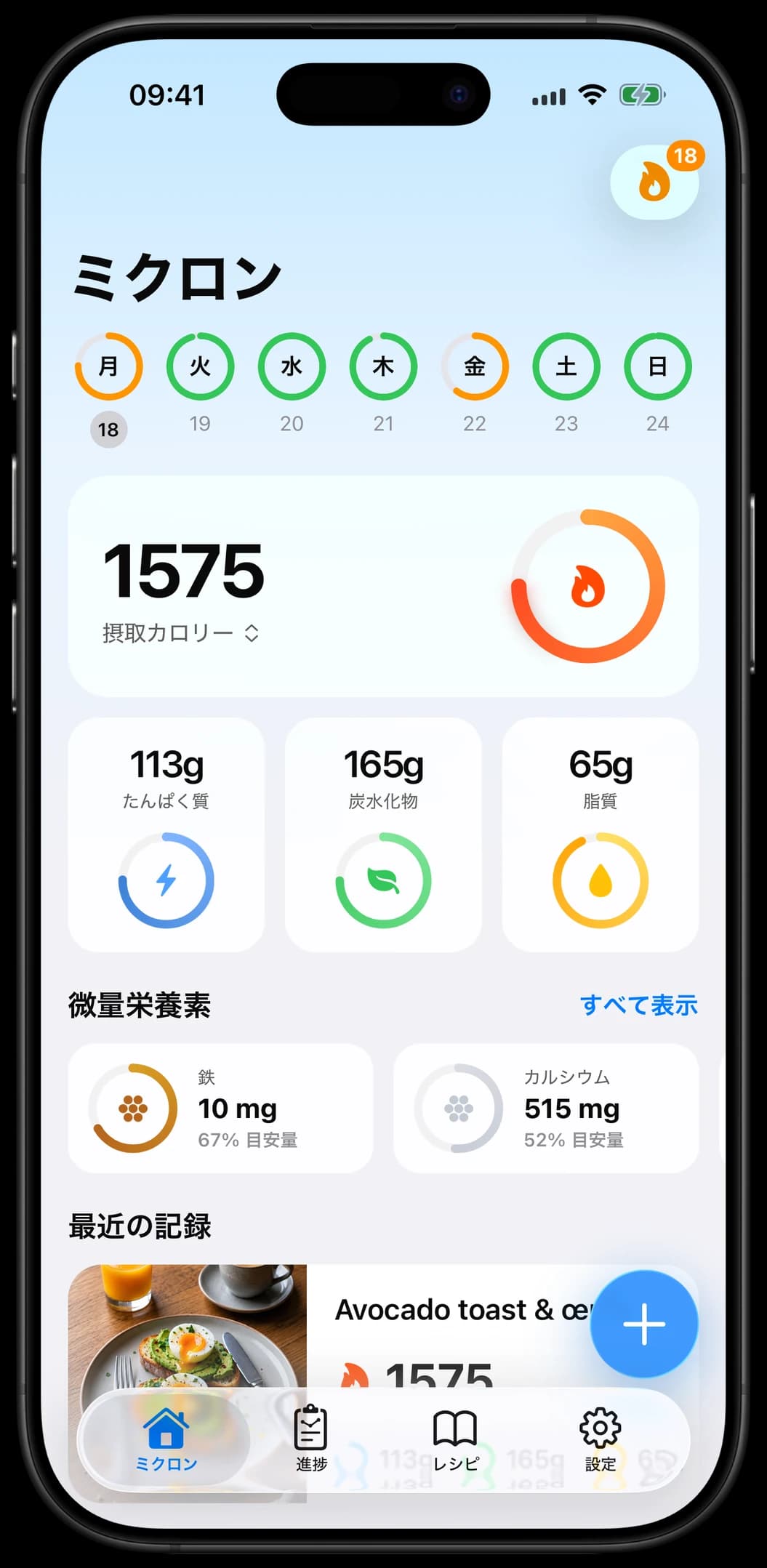
Track your macros with Micron

AI scan, protein and micronutrient tracking · 150,000+ users

App StoreからダウンロードGoogle Playで手に入れる
最も充実した栄養アプリ

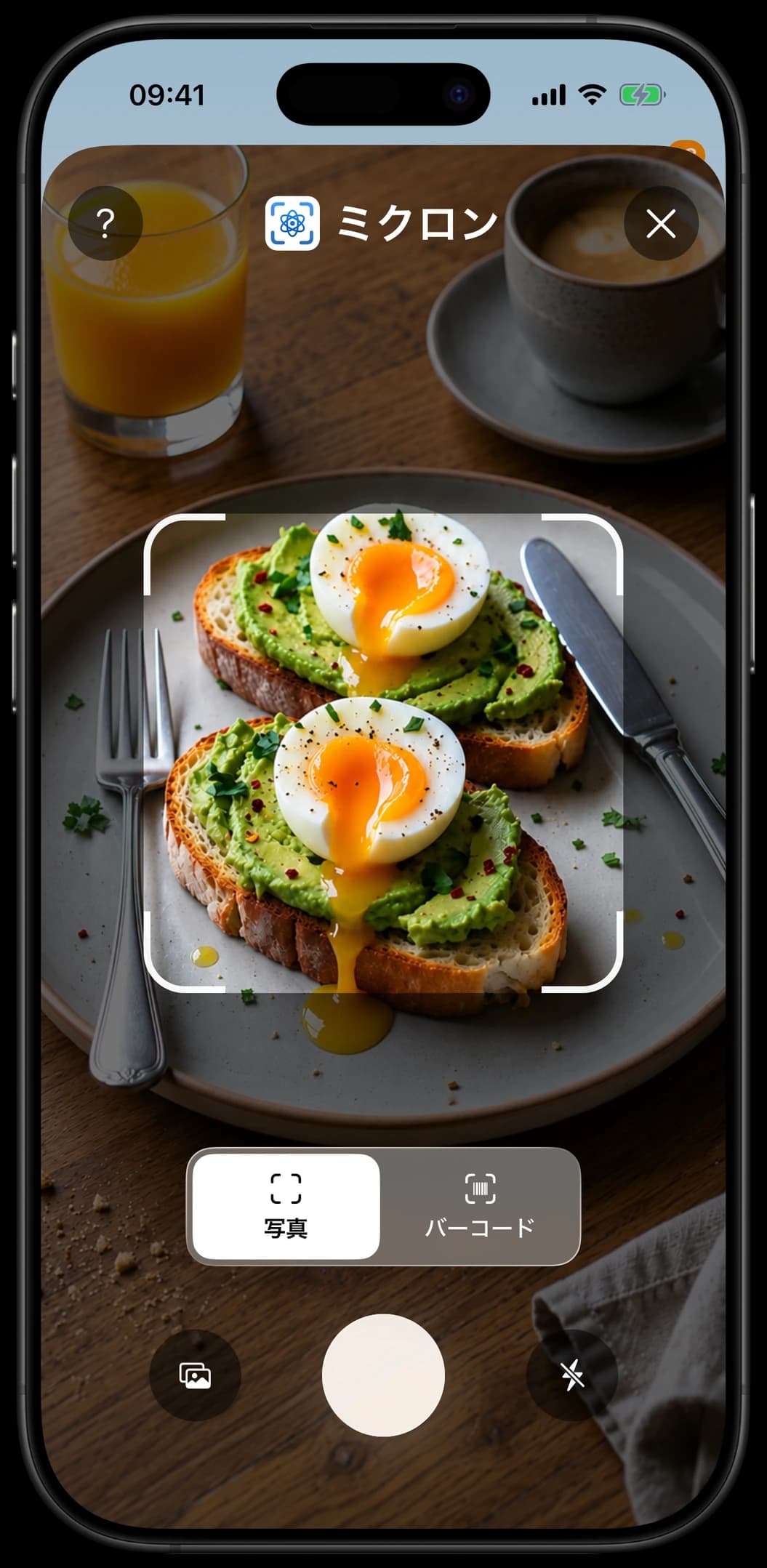
カロリーを写真から記録。

食事を撮るだけで、カロリー・マクロ・30種類以上の微量栄養素を即座に計算します。

App StoreからダウンロードGoogle Playで手に入れる
4.8 · 2,300件以上の評価

How does the calculation work?

Step 01

Basal metabolic rate (BMR)

Mifflin-St Jeor equation, considered the most accurate by the scientific literature. Calculates your minimum resting calorie needs from your gender, age, height and weight.

Step 02

TDEE and deficit calibration

BMR is multiplied by an activity factor (1.2 to 1.9) to estimate your real expenditure. A 15%, 20% or 25% deficit is then applied based on the chosen mode.

Step 03

Macros from lean body mass

Protein is calculated from LBM (weight × (1 − body fat %)) at 2.3–2.8 g/kg depending on your level. Fat at 25% of target kcal, carbs make up the rest. This evidence-based approach preserves muscle mass in a deficit (Helms et al., 2014).

What is a cut in lifting?

A cut is a caloric deficit phase run by a trained lifter, with the goal of losing fat while preserving muscle mass and strength built during bulking phases. It's the second half of the natural bodybuilding bulk/cut cycle.

It differs from a standard caloric deficit by: a population already training for ≥ 6 months, very high protein intake (2.5 g/kg of lean mass), unchanged training to signal to the body that the muscle is needed, and programmed refeeds to preserve hormones and performance.

Why 2.5 g/kg of lean mass?

Under caloric restriction, the body activates muscle proteolysis to supply amino acids. High protein intake saturates this mechanism: nitrogen balance stays positive, muscle is preserved. Meta-analyses (Helms 2014, Phillips 2019) converge on 2.3–3.1 g/kg LBM in a deficit for trained lifters. That's higher than general recommendations (1.8–2.2 g/kg body weight) because muscle stress in a deficit raises repair needs.

6 tips to nail your cut

01

Aim for 2.5 g/kg of lean mass in protein

Spread across 4–5 feedings of 30–50 g, 3–4 hours apart. Priority sources: lean meats, fish, eggs, skyr, with whey as a supplement.

02

Never drop your loads

Training stays identical to the bulk. If your loads drop sharply (-10 to -15%), your deficit is too aggressive or your recovery is insufficient (sleep, protein).

03

Walk 8,000–10,000 steps/day

The #1 lever to deepen the deficit without taxing muscle recovery. More effective than 5 hours of intense cardio, and sustainable.

04

Schedule 1 refeed per week

A day at TDEE with high carbs (4–6 g/kg body weight), placed on a heavy training day. Restores leptin and muscle glycogen.

05

Weigh all your food for the first 4 weeks

80% of plateaus come from underestimated intake (Lichtman, 1992). Precise tracking calibrates your eye for later.

06

Exit gradually (reverse diet)

+100 to +150 kcal/week over 4–6 weeks after the cut. Snapping back to your previous maintenance = +3–5 kg in 2 weeks, 60% of which is fat.

Bulk / cut cycle

Coming off a cut? Time to lean bulk.

Once you hit your target body fat and finish the reverse diet, switch to a calibrated caloric surplus phase (lean bulk +10%) to gain clean muscle before the next cut.

Calculate my lean bulk surplus

Frequently asked questions about cutting

科学的な出典

この記事は、以下に挙げる査読済みの研究・刊行物8件にもとづいています。各リンクは一次情報(PubMed、NIH、政府機関、学術誌)に直接つながります。

  1. [1]Helms ER, Aragon AA, Fitschen PJ (2014). Evidence-based recommendations for natural bodybuilding contest preparation: nutrition and supplementation. Journal of the International Society of Sports Nutrition. 出典を見る ↗PMID : 24864135
  2. [2]Phillips SM, Van Loon LJC (2019). Dietary protein for athletes: from requirements to optimum adaptation. Journal of Sports Sciences. 出典を見る ↗PMID : 22150425
  3. [3]Schoenfeld BJ, Aragon AA (2018). How much protein can the body use in a single meal for muscle-building? Implications for daily protein distribution. Journal of the International Society of Sports Nutrition. 出典を見る ↗PMID : 29497353
  4. [4]Byrne NM, Sainsbury A, King NA, et al. (2018). Intermittent energy restriction improves weight loss efficiency in obese men: the MATADOR study. International Journal of Obesity. 出典を見る ↗PMID : 28925405
  5. [5]Longland TM, Oikawa SY, Mitchell CJ, et al. (2016). Higher compared with lower dietary protein during an energy deficit combined with intense exercise promotes greater lean mass gain and fat mass loss. American Journal of Clinical Nutrition. 出典を見る ↗PMID : 26817506
  6. [6]Mifflin MD, St Jeor ST, Hill LA, et al. (1990). A new predictive equation for resting energy expenditure in healthy individuals. American Journal of Clinical Nutrition. 出典を見る ↗PMID : 2305711
  7. [7]Trexler ET, Smith-Ryan AE, Norton LE (2014). Metabolic adaptation to weight loss: implications for the athlete. Journal of the International Society of Sports Nutrition. 出典を見る ↗PMID : 24571926
  8. [8]Iraki J, Fitschen P, Espinar S, Helms ER (2019). Nutrition recommendations for bodybuilders in the off-season: a narrative review. Sports. 出典を見る ↗PMID : 31247944
Photo of Adrien Grusse

About the author

Adrien Grusse

Micron 創業者

アドリアン・グリュスは、15万人以上のユーザーが日々の微量栄養素を記録するアプリ「Micron」の創業者です。Micron以前は、Finary(Y Combinator)のグロースチームに在籍していました。アドリアンは有資格の管理栄養士ではありません — ここでの役割は、科学的な文献を正確に、わかりやすく伝えることです。すべての記事は査読済みの文献(PubMed、Cochrane、近年のメタアナリシス)を出典として明示しており、検証可能な根拠のない主張は掲載していません。個別の医学的なフォローアップについては、医療専門家にご相談ください。

Track your cut day by day

Ultra-fast scan · Protein + macro + micronutrient tracking · Detailed stats · 150,000+ users

App StoreからダウンロードGoogle Playで手に入れる
減量計算ツール — カロリー、タンパク質、期間 — Micron