Your Microbiome Score
What your meals do for your gut
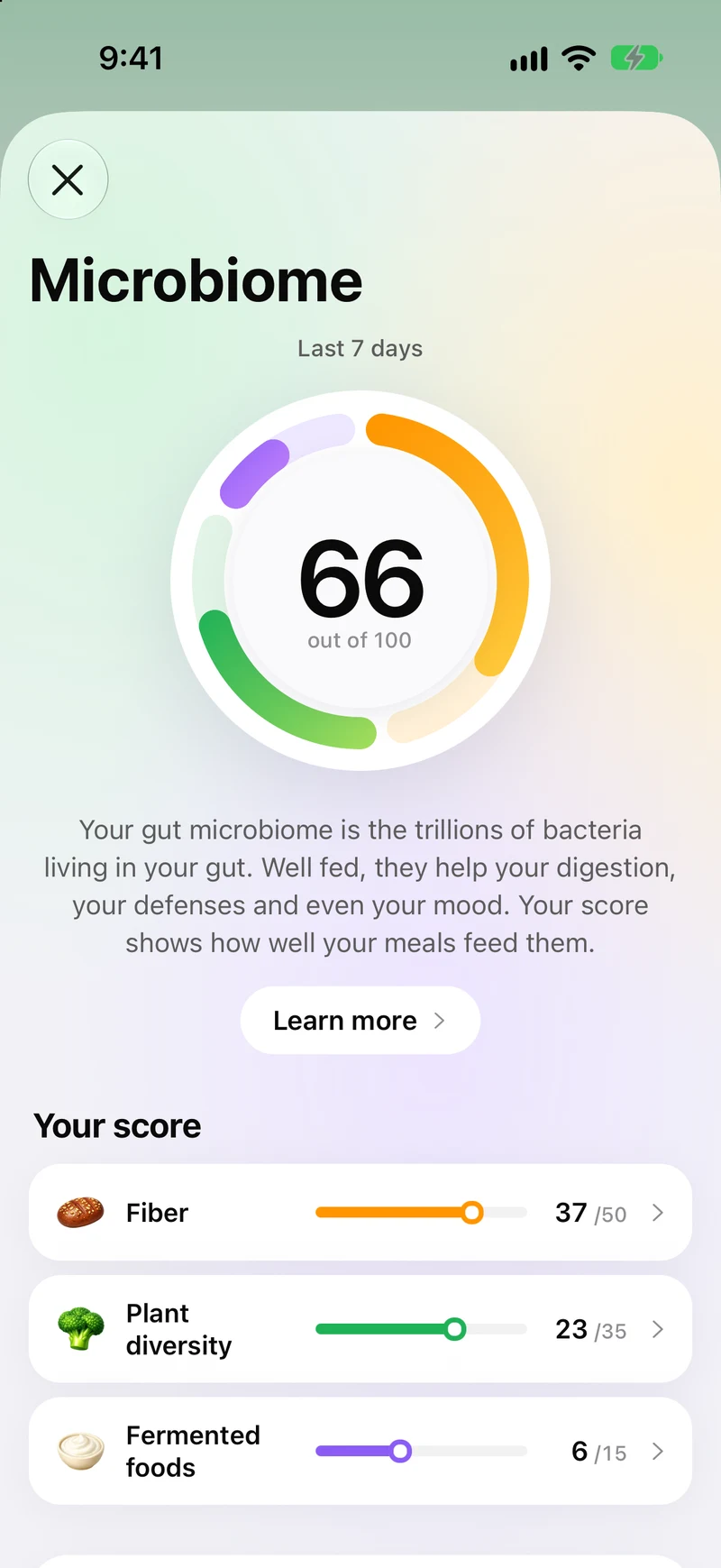
Micron is a food diary app that counts how many different plants you eat over seven days. Open Microbiome in the Progress tab to see your plant groups, fiber intake and fermented foods for the week.



How do I count the different plants I eat in a week?
Log your meals in Micron. Each plant the app recognizes counts once in a rolling seven-day window. A lentil salad with tomatoes and parsley can add three plants. Eating tomatoes again the next day leaves your tomato count at one.
Micron tracks six groups: vegetables, fruits, legumes, whole grains, nuts and seeds, and herbs and spices. Tap a group to see its foods. If you log a meal simply as “vegetable soup”, the app cannot tell which plants went into it.
What does the Microbiome Score measure?
For adults, the score summarizes the meals in the diary. Fiber accounts for up to 50 points out of 100, plant diversity for 35, and fermented foods for 15. The plant list starts with your first meals. The score appears once four of the last seven days have enough food data.
Use the diary to answer a food question: “How varied are the plants I eat?” Identifying the microbes in your gut would require biological testing. The score describes dietary habits and cannot measure the composition of your gut microbiome.
Why does Micron use 30 plants per week?
The American Gut Project observed differences in gut microbiome composition between groups who reported eating fewer than 10 or more than 30 plant types a week. Micron uses 30 as a reference for food variety. The observational study did not establish a personal health threshold.