Foods high in vitamins, minerals and key nutrients
For every nutrient Micron tracks: the foods that contain the most, actual amounts per 100 g, and the habits that improve absorption.
Minerals
Foods high in iron
Dietary iron is not created equal: its form (heme vs non-heme) matters as much as the amount. Here is the ranking — and how to absorb more of it.
→
Foods high in magnesium
Stress, sleep, cramps: magnesium is the mineral everyone suspects they lack. Good news — the foods richest in it are also the easiest to add to your day.
→
Foods high in potassium
Potassium is sodium’s natural counterweight: the less processed and more plant-based your diet, the more of it you get. Here is where to find it, numbers included.
→
Foods high in zinc
Immunity, skin, testosterone, wound healing: zinc is everywhere, yet your reserves are tiny. Oysters are untouchable — the rest of the ranking is more surprising.
→
Foods high in calcium
Calcium is not just milk: aged cheeses, sardines, sesame, tofu and some mineral waters are loaded with it. The full ranking, lactose-free options included.
→
Vitamins
Foods high in vitamin D
Let’s be honest: food only covers a fraction of vitamin D needs. But choosing the right foods changes everything — especially from October to March.
→
Foods high in vitamin C
The orange doesn’t even make the top 10: bell peppers, blackcurrant, kiwi and brassicas beat it clearly. And since vitamin C hates heat, how you cook matters as much as what you buy.
→
Foods high in vitamin B12
B12 has a unique quirk: in useful amounts, it only exists in animal products. The ranking is unambiguous — and so is the message for vegans.
→
Foods high in folate (vitamin B9)
The name comes from “folium” — leaf — and the ranking proves it: greens and legumes reign. A nutrient that is critical well beyond pregnancy.
→
Foods high in vitamin A
Two worlds coexist: animal retinol, directly usable, and plant beta-carotene, which the body converts on demand. The ranking mixes both — the uses differ.
→
Foods high in vitamin E
Vitamin E lives in fat — quality oils, seeds and nuts own the entire ranking. Good news: 30 g of sunflower seeds already takes you two thirds of the way.
→
Foods high in vitamin K
K stands for “Koagulation”: dark leafy greens overflow with it, and a fermented Japanese food holds the K2 record. The darker the green on your plate, the better your score.
→
Foods high in vitamin B6
B6 is the workhorse of protein metabolism: the more protein you eat, the more you use. Pistachios, fish and poultry do most of the heavy lifting.
→
Other nutrients
Foods high in omega-3
Not all omega-3s are equal: plant ALA and marine EPA/DHA do not deliver the same services. This ranking keeps them apart — the only honest way to rank them.
→
Foods high in fiber
Satiety, microbiome, blood sugar, cholesterol: few nutrients tick this many boxes. Yet most adults only reach half the target.
→
Foods high in protein
Muscle, satiety, recovery: protein is the macro everyone counts. Here are the densest sources — animal and plant — and the amounts you actually need.
→
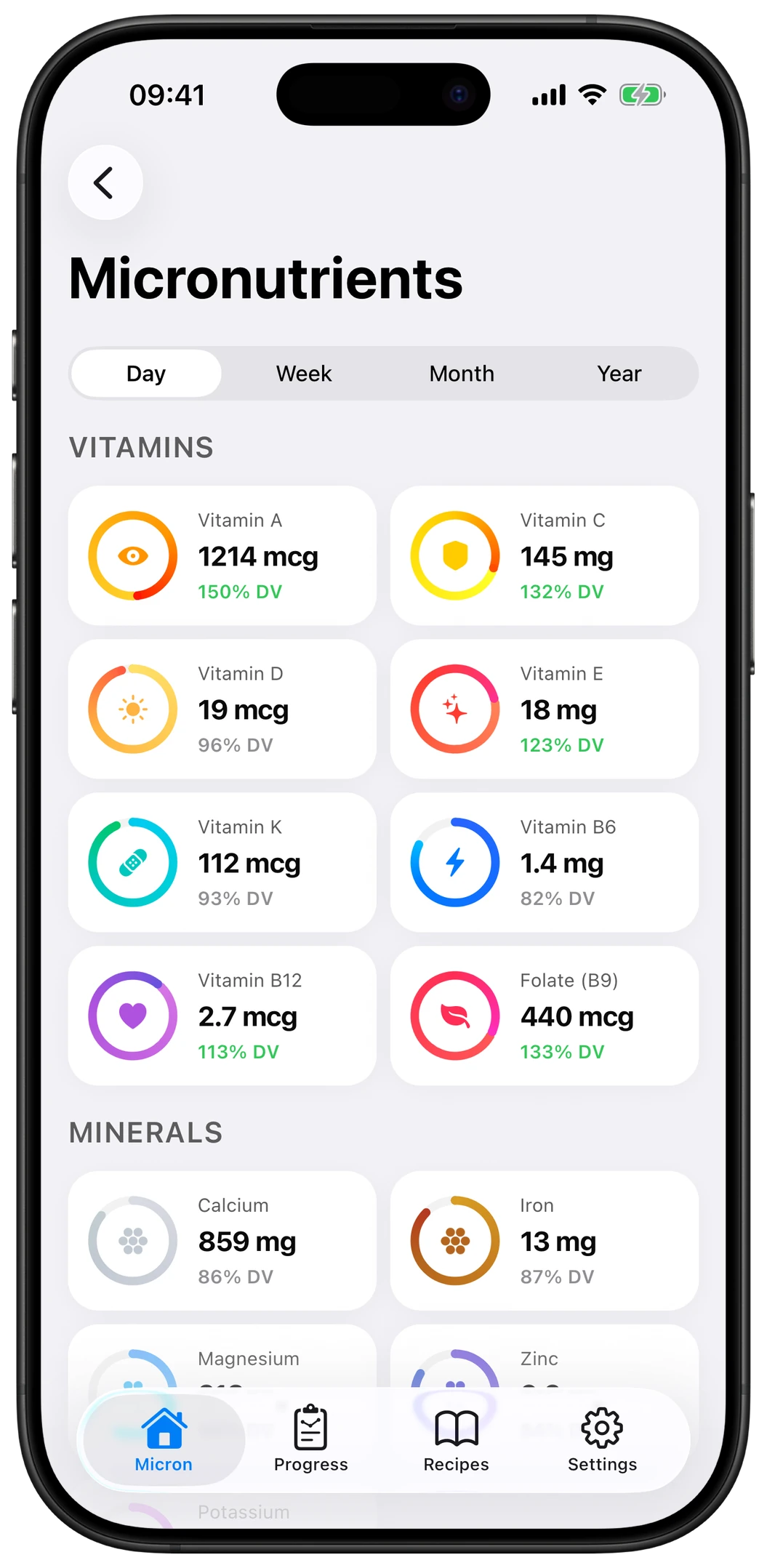
Track these intakes with Micron
Micron analyzes your meals and tracks 29 nutrients — iron, magnesium, vitamins, omega-3… Every day you see your % of target and what is actually missing.