Foods high in fiber: the 14 best sources
Satiety, microbiome, blood sugar, cholesterol: few nutrients tick this many boxes. Yet most adults only reach half the target.
Why fiber changes everything
Fiber is the carbohydrate you don’t digest — which is precisely the point: it slows sugar absorption, feeds the microbiome (fermentable soluble fiber), boosts satiety and regulates transit (insoluble fiber).
The evidence is massive: every extra 8 g of daily fiber is associated with a notable drop in cardiovascular risk, type-2 diabetes and some digestive cancers. One of the highest-yield dietary levers there is.
The ranking: fiber per 100 g
Daily target used by Micron: 28 g per day for an adult.
- 1
Wheat bran
43g
154%
1 tbsp (10 g)4.3 g · 15%
Eaten in small amounts: scale the value down to a realistic serving of a few grams.
- 2

Chia seeds
34g
121%
1 tbsp (12 g)4.1 g · 15%
Eaten in small amounts: scale the value down to a realistic serving of a few grams.
- 3

Popcorn (air-popped)
14.5g
52%
1 serving (30 g)4.4 g · 16%
- 4

Almonds
12.5g
45%
1 handful (30 g)3.8 g · 13%
- 5

Dark chocolate (70-85%)
10.9g
39%
1 serving (20 g)2.2 g · 8%
- 6

Rolled oats
10.6g
38%
1 serving (40 g)4.2 g · 15%
- 7

White beans (cooked)
10.5g
38%
1 serving (150 g)16 g · 56%
- 8

Passion fruit
10.4g
37%
1 serving (50 g)5.2 g · 19%
- 9

Artichoke (cooked)
8.6g
31%
1 piece (120 g)10 g · 37%
- 10

Lentils (cooked)
7.9g
28%
1 serving (150 g)12 g · 42%
- 11

Chickpeas (cooked)
7.6g
27%
1 serving (150 g)11 g · 41%
- 12

Prunes
7.1g
25%
1 serving (30 g)2.1 g · 8%
- 13

Raspberries
6.5g
23%
- 14

Green peas (cooked)
5.5g
20%
Values per 100 g. Wheat bran and chia are used by the spoonful (10-20 g) — even so, their contribution stays major.
How to add fiber without the discomfort
- Increase GRADUALLY (over 2-3 weeks) and drink more: fiber absorbs water — that duo prevents bloating.
- Switch grains to whole versions one at a time (bread, rice, pasta): each swap adds 2-4 g per serving without changing habits.
- Legumes are the best fiber/protein/price deal: 3 servings a week transform your average.
- Keep the skin on organic fruits and vegetables (apple, pear, potato): it concentrates much of the insoluble fiber.
- Blending does not destroy fiber (a smoothie keeps it all) — juicing filters nearly all of it out.
How much fiber per day?
Micron uses a target of 28 g/day (customizable in the app). European and US references aim for 25-30 g — real average consumption stalls at 15-20 g.
The gap closes fast: an oat + chia breakfast (~8 g), one serving of lentils (~8 g) and two fruits (~5 g) nearly get you there on their own.
Track these intakes with Micron
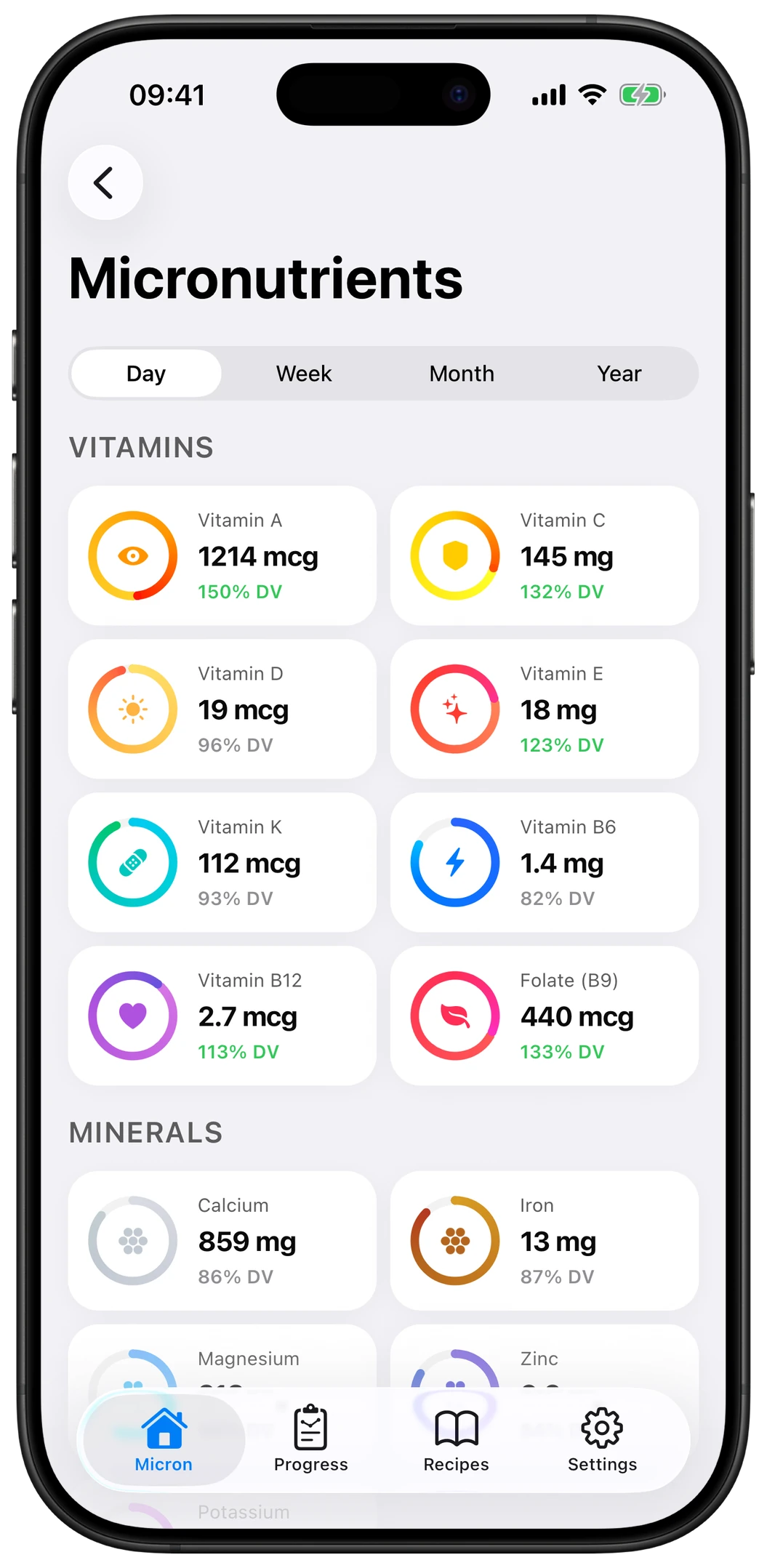
Micron analyzes your meals and tracks 29 nutrients — iron, magnesium, vitamins, omega-3… Every day you see your % of target and what is actually missing.


Frequently asked questions
Which food contains the most fiber?
Wheat bran (43 g/100 g) is unbeatable, followed by chia seeds (34 g). On real servings, legumes (8-10 g/100 g cooked), passion fruit, raspberries and artichokes are the most effective contributors.
Soluble or insoluble fiber: do you have to choose?
No — they are complementary: soluble fiber (oats, legumes, apples) regulates blood sugar and cholesterol and feeds the microbiome; insoluble fiber (bran, whole grains, skins) speeds up transit. A varied diet naturally provides both.
Is too much fiber a thing?
Yes, especially if the increase is sudden: bloating, gas, discomfort — and beyond ~50-60 g/day, possible interference with some mineral absorption. The rule: gradual increase + hydration. IBS-prone guts should adjust fiber types with a professional.
More nutrients to explore
Data sources
Values from the USDA FoodData Central, CIQUAL (ANSES) composition tables and NIH fact sheets. Amounts vary with variety, origin and cooking — read them as reliable orders of magnitude, not lab-grade precision. CIQUAL ↗ · USDA FoodData Central ↗ · NIH ODS ↗
⚠️ This article is for information only and does not replace medical advice. Needs vary with age, sex and situation (pregnancy, conditions, medication): if in doubt or symptomatic, talk to a health professional.