Foods high in calcium: the 14 best sources
Calcium is not just milk: aged cheeses, sardines, sesame, tofu and some mineral waters are loaded with it. The full ranking, lactose-free options included.
Why calcium stays central
99% of the body’s calcium is stored in bones and teeth, but the remaining 1% is vital: muscle contraction, blood clotting, nerve transmission. When intake falls short, the body withdraws from bone — silently, for years.
Bone capital is built before age 30 and maintained afterwards: needs stay high for life, and rise again for teenagers, post-menopausal women and adults over 65.
The ranking: calcium per 100 g
Daily target used by Micron: 1,000 mg per day for an adult.
- 1

Parmesan
1,180mg
118%
1 serving (30 g)354 mg · 35%
- 2

Sesame seeds
975mg
98%
1 tbsp (9 g)88 mg · 9%
Eaten in small amounts: scale the value down to a realistic serving of a few grams.
- 3

Emmental (Swiss cheese)
970mg
97%
1 serving (30 g)291 mg · 29%
- 4

Mozzarella
505mg
51%
1 serving (60 g)303 mg · 30%
- 5

Feta
493mg
49%
1 serving (40 g)197 mg · 20%
- 6

Sardines (canned, with bones)
382mg
38%
1 serving (60 g)229 mg · 23%
- 7

Tofu (calcium-set)
350mg
35%
Content varies with the coagulant used and firmness.
- 8

Almonds
269mg
27%
1 handful (30 g)81 mg · 8%
- 9

Dried figs
162mg
16%
1 serving (30 g)49 mg · 5%
- 10

Arugula (rocket)
160mg
16%
1 serving (30 g)48 mg · 5%
- 11

Plain yogurt
140mg
14%
1 serving (125 g)175 mg · 18%
- 12

Semi-skimmed milk
120mg
12%
1 glass (250 g)300 mg · 30%
- 13

Pak choi (cooked)
93mg
9%
1 serving (150 g)140 mg · 14%
- 14

White beans (cooked)
90mg
9%
1 serving (150 g)135 mg · 14%
Values per 100 g. Sesame is eaten by the spoonful: scale to your serving. Off-table bonus: calcium-rich mineral waters deliver 400-580 mg/L.
How to optimize calcium and its absorption
- Without vitamin D, calcium is poorly absorbed: work on both together (oily fish, eggs, sun exposure, winter supplementation if needed).
- Calcium-rich mineral waters are a real source — up to ~550 mg/L of well-absorbed calcium, precious if you are lactose intolerant.
- Spinach is a false friend: high in calcium on paper, but its oxalates block nearly all absorption. Arugula, pak choi and broccoli are far more “profitable”.
- Spread intake through the day: beyond ~500 mg at once, the absorbed fraction drops.
- Calcium-set tofu (check the label for calcium sulfate) is one of the best plant sources: up to 350 mg/100 g.
How much calcium per day?
Micron uses a target of 1,000 mg/day, aligned with adult references in Europe and the US. Teenagers and adults over 65 go up to 1,200 mg.
Without dairy the target is reachable but takes method: calcium waters, calcium-set tofu, sardines, sesame and low-oxalate greens have to become reflexes.
Track these intakes with Micron
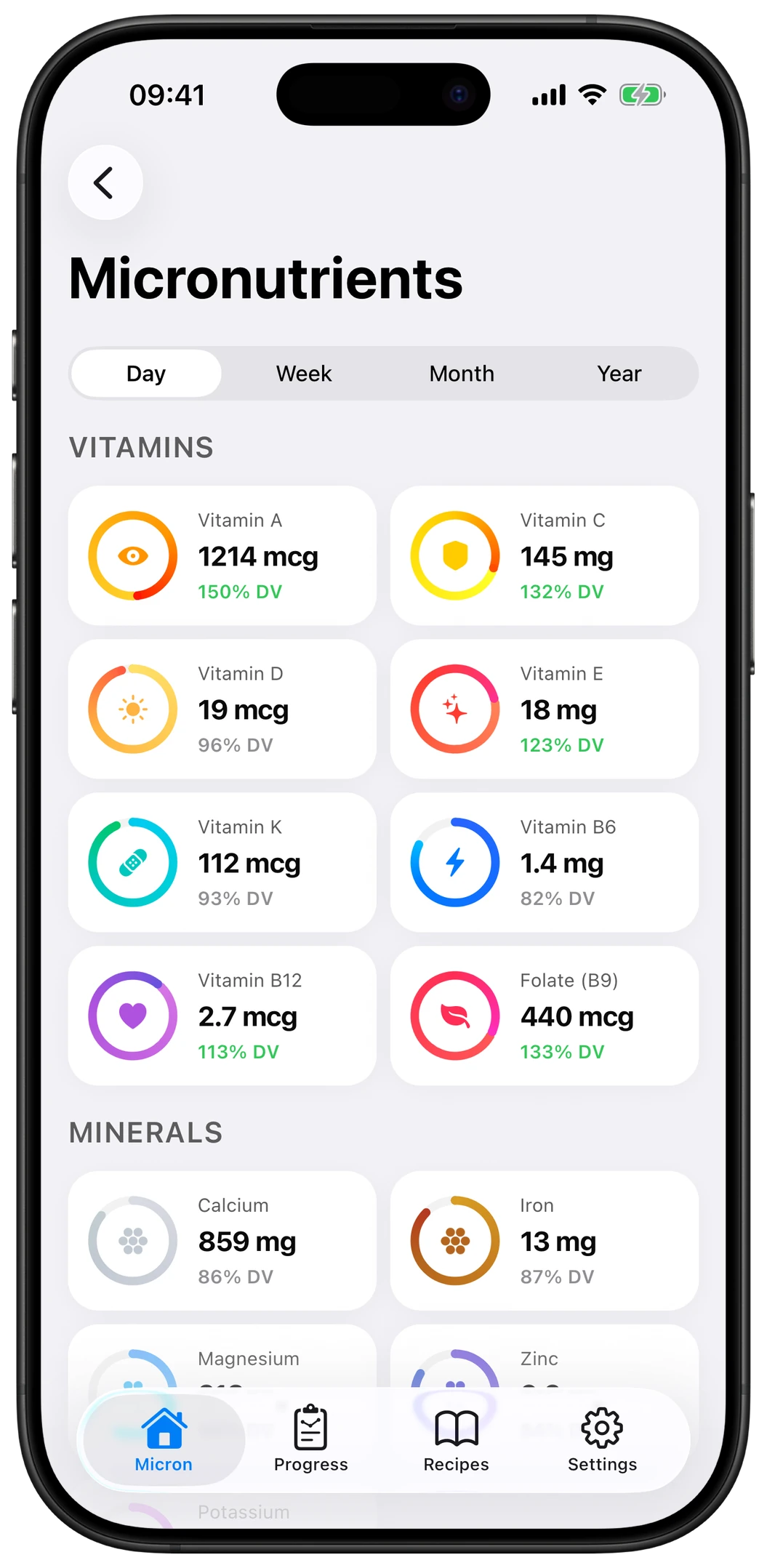
Micron analyzes your meals and tracks 29 nutrients — iron, magnesium, vitamins, omega-3… Every day you see your % of target and what is actually missing.


Frequently asked questions
Which food is highest in calcium?
Hard cheeses: Parmesan peaks at 1,180 mg/100 g, Emmental at 970 mg. A 30 g serving already brings about 300-350 mg — a third of the daily target.
How do you get enough calcium without lactose?
Four pillars: calcium-rich mineral waters (up to 580 mg/L), calcium-set tofu, small fish eaten with bones (sardines: 382 mg/100 g) and well-absorbed plants (sesame, almonds, arugula, pak choi). Aged cheeses barely contain lactose anyway.
Should you take calcium supplements?
Not by default: evidence only supports supplementing when food intake stays durably insufficient or in specific medical situations. Start by measuring what you actually eat — that is usually the most useful step.
More nutrients to explore
Data sources
Values from the USDA FoodData Central, CIQUAL (ANSES) composition tables and NIH fact sheets. Amounts vary with variety, origin and cooking — read them as reliable orders of magnitude, not lab-grade precision. CIQUAL ↗ · USDA FoodData Central ↗ · NIH ODS ↗
⚠️ This article is for information only and does not replace medical advice. Needs vary with age, sex and situation (pregnancy, conditions, medication): if in doubt or symptomatic, talk to a health professional.