Foods high in magnesium: the 14 best sources
Stress, sleep, cramps: magnesium is the mineral everyone suspects they lack. Good news — the foods richest in it are also the easiest to add to your day.
Why magnesium matters so much
Magnesium takes part in over 300 enzymatic reactions: energy production, muscle contraction, nerve signaling, stress and sleep regulation. The body keeps only a small mobilizable reserve — intake has to be regular.
Dietary surveys across Europe and the US show a large share of adults below recommended intakes, largely because of refined foods: refining grains strips up to 80% of their magnesium.
The ranking: magnesium per 100 g
Daily target used by Micron: 380 mg per day for an adult.
| Food | per 100 g | per typical serving |
|---|---|---|
1 Pumpkin seedsEaten in small amounts: scale the value down to a realistic serving of a few grams. | 550mg145% | 1 tbsp (15 g)83mg22% |
| 2Cocoa powder (unsweetened)Eaten in small amounts: scale the value down to a realistic serving of a few grams. | 499mg131% | 1 tbsp (5 g)25mg7% |
3 Brazil nutsEaten in small amounts: scale the value down to a realistic serving of a few grams. | 376mg99% | 1 serving (10 g)38mg10% |
4 Chia seedsEaten in small amounts: scale the value down to a realistic serving of a few grams. | 335mg88% | 1 tbsp (12 g)40mg11% |
5 Cashews | 292mg77% | 1 handful (30 g)88mg23% |
6 Almonds | 270mg71% | 1 handful (30 g)81mg21% |
7 Buckwheat (raw) | 231mg61% | 1 serving (60 g)139mg36% |
8 Dark chocolate (70-85%) | 228mg60% | 1 serving (20 g)46mg12% |
9 Peanuts | 168mg44% | 1 handful (30 g)50mg13% |
10 Rolled oats | 138mg36% | 1 serving (40 g)55mg15% |
11 Spinach (cooked) | 87mg23% | 1 serving (150 g)131mg34% |
12 Black beans (cooked) | 70mg18% | 1 serving (150 g)105mg28% |
13 Quinoa (cooked) | 64mg17% | 1 serving (150 g)96mg25% |
14 BananaFamous for this mineral, the banana is actually a modest source. | 27mg7% | 1 piece (120 g)32mg9% |
Values per 100 g. Pure cocoa and seeds are eaten 10-30 g at a time: think “a handful”, not “100 g”, when estimating your real intake.
Calculate your portion
Choose a food from the ranking and adjust its weight.
How to optimize your magnesium intake
- A handful of nuts (30 g of almonds or cashews) delivers 80-90 mg — nearly a quarter of the target: the single easiest habit.
- Some mineral waters carry 100-160 mg/L: drinking “useful” water quietly adds up.
- Choose whole or semi-whole grains: refining removes most of the grain’s magnesium.
- Boiling leaches magnesium out of vegetables: steam, roast or keep the cooking water for soup.
- Regular alcohol, chronic stress and heavy sweating increase losses: athletes and stressful stretches deserve a closer look at intake.
How much magnesium per day?
Micron uses a target of 380 mg/day for an adult man and 300 mg for a woman — European references are close (350/300 mg). Count a bit more if you train hard.
A mild shortfall is easy to miss (fatigue, irritability, night cramps): tracking intake for a few weeks is usually enough to see whether you actually reach the mark.
Track these intakes with Micron
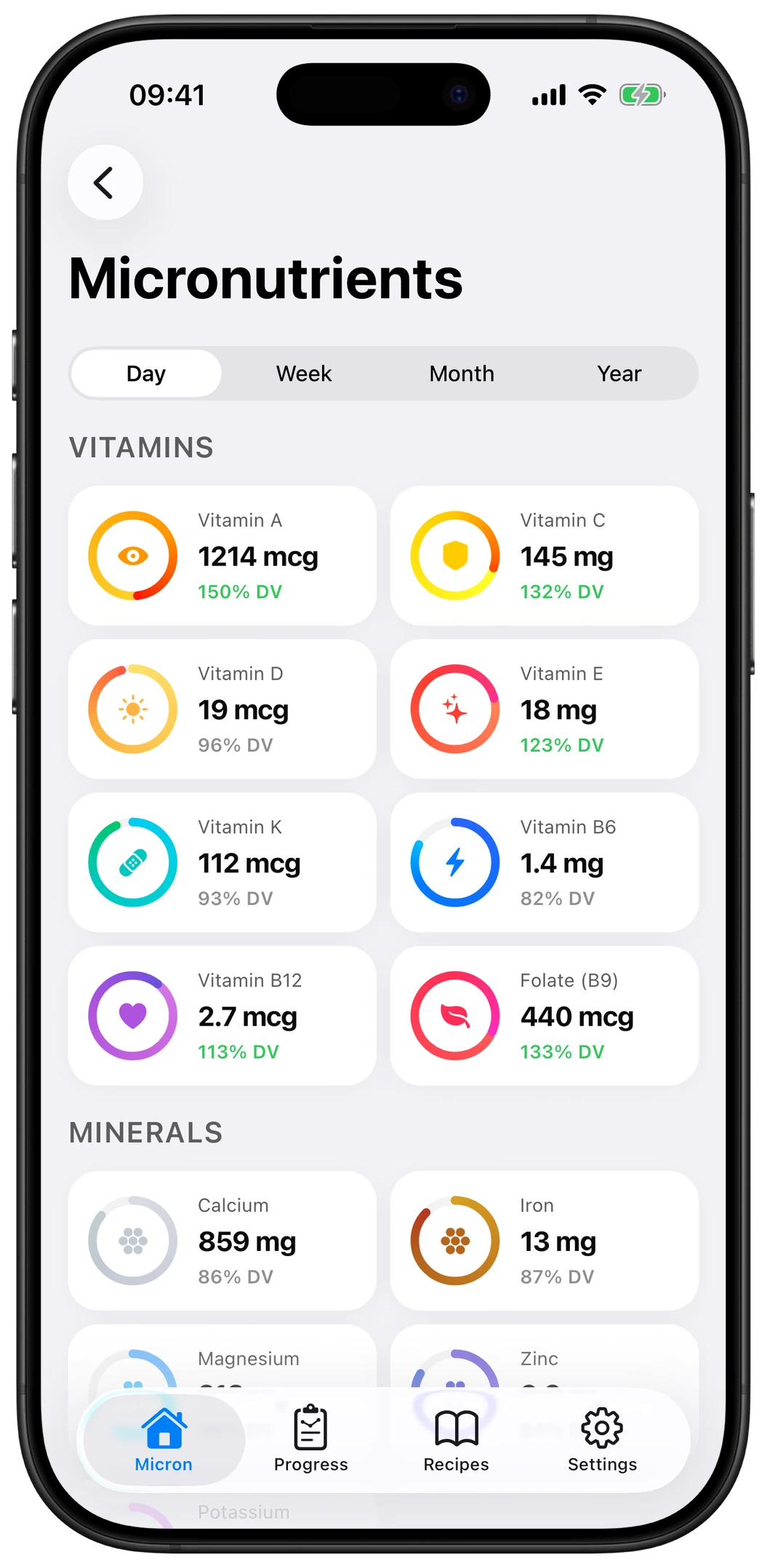
Micron analyzes your meals and tracks 29 nutrients — iron, magnesium, vitamins, omega-3… Every day you see your % of target and what is actually missing.


Frequently asked questions
Which food contains the most magnesium?
Pumpkin seeds crush the ranking at 550 mg/100 g, ahead of pure cocoa powder (499 mg) and Brazil nuts (376 mg). In practice, 30 g of pumpkin seeds already deliver 165 mg — nearly half the daily target.
Are bananas high in magnesium?
Not really: 27 mg/100 g, ten times less than seeds or nuts. The reputation comes from convenience, not content. A banana contributes, but cannot carry your intake alone.
Dark chocolate and magnesium: myth or fact?
Fact — provided it is real dark chocolate at 70% cocoa or more: 228 mg/100 g, about 45 mg for two squares (20 g). The higher the cocoa percentage, the higher the magnesium.
More nutrients to explore
Data sources
Values from the USDA FoodData Central, CIQUAL (ANSES) composition tables and NIH fact sheets. Amounts vary with variety, origin and cooking — read them as reliable orders of magnitude, not lab-grade precision. CIQUAL ↗ · USDA FoodData Central ↗ · NIH ODS ↗
⚠️ This article is for information only and does not replace medical advice. Needs vary with age, sex and situation (pregnancy, conditions, medication): if in doubt or symptomatic, talk to a health professional.