Foods high in vitamin K: the 11 best sources
K stands for “Koagulation”: dark leafy greens overflow with it, and a fermented Japanese food holds the K2 record. The darker the green on your plate, the better your score.
Why vitamin K is discreet but key
Vitamin K activates the blood-clotting proteins — without it, the smallest cut would be a problem. It also helps fix calcium onto bone and, conversely, keep it out of artery walls.
It exists in two forms: K1 (phylloquinone) from leafy greens, dominant in the diet, and K2 (menaquinones) from fermented foods and animal products, whose bone and cardiovascular roles are an active research field.
The ranking: vitamin K per 100 g
Daily target used by Micron: 120 µg per day for an adult.
- 1

Fresh parsley
1,640µg
> 500%
1 tbsp (4 g)66 µg · 55%
Eaten in small amounts: scale the value down to a realistic serving of a few grams.
- 2
Natto
1,000µg
> 500%
1 serving (40 g)400 µg · 333%
Exceptional source of vitamin K2 (leafy greens mostly provide K1).
- 3
Swiss chard (raw)
830µg
> 500%
1 serving (40 g)332 µg · 277%
- 4

Spinach (cooked)
494µg
412%
1 serving (150 g)741 µg · > 500%
- 5

Kale (cooked)
418µg
348%
- 6

Soybean oil
184µg
153%
1 tbsp (13 g)24 µg · 20%
Eaten in small amounts: scale the value down to a realistic serving of a few grams.
- 7

Broccoli (cooked)
141µg
118%
1 serving (150 g)212 µg · 176%
- 8

Brussels sprouts (cooked)
140µg
117%
1 serving (150 g)210 µg · 175%
- 9

Cabbage (cooked)
109µg
91%
1 serving (150 g)164 µg · 136%
- 10

Romaine lettuce
103µg
86%
1 serving (50 g)52 µg · 43%
- 11

Rapeseed (canola) oil
71µg
59%
1 tbsp (13 g)9.2 µg · 8%
Eaten in small amounts: scale the value down to a realistic serving of a few grams.
Values per 100 g. Parsley is eaten by the pinch: 10 g still deliver ~164 µg — above the daily target.
What to know about vitamin K
- One serving of dark leafy greens (spinach, kale, chard) covers the target several times over: the easiest nutrient to saturate… if you eat green.
- Fat-soluble: a drizzle of oil on greens clearly improves absorption — vinaigrette is your ally.
- On VKA anticoagulants (warfarin): do NOT cut leafy greens — keep intake STABLE day to day. It is variation that destabilizes treatment, not quantity.
- K2 from fermented foods (natto, aged cheeses) stays active in blood longer than K1 — an argument for diversifying sources.
- Vitamin K withstands cooking well, unlike the folate in the same vegetables.
How much vitamin K per day?
Micron uses a target of 120 µg/day, the broadest adult reference. EFSA uses 70 µg — whichever you pick, a regular green plate exceeds it effortlessly.
No known toxicity for food vitamin K: the only vigilance case is the interaction with VKA anticoagulant treatment.
Track these intakes with Micron
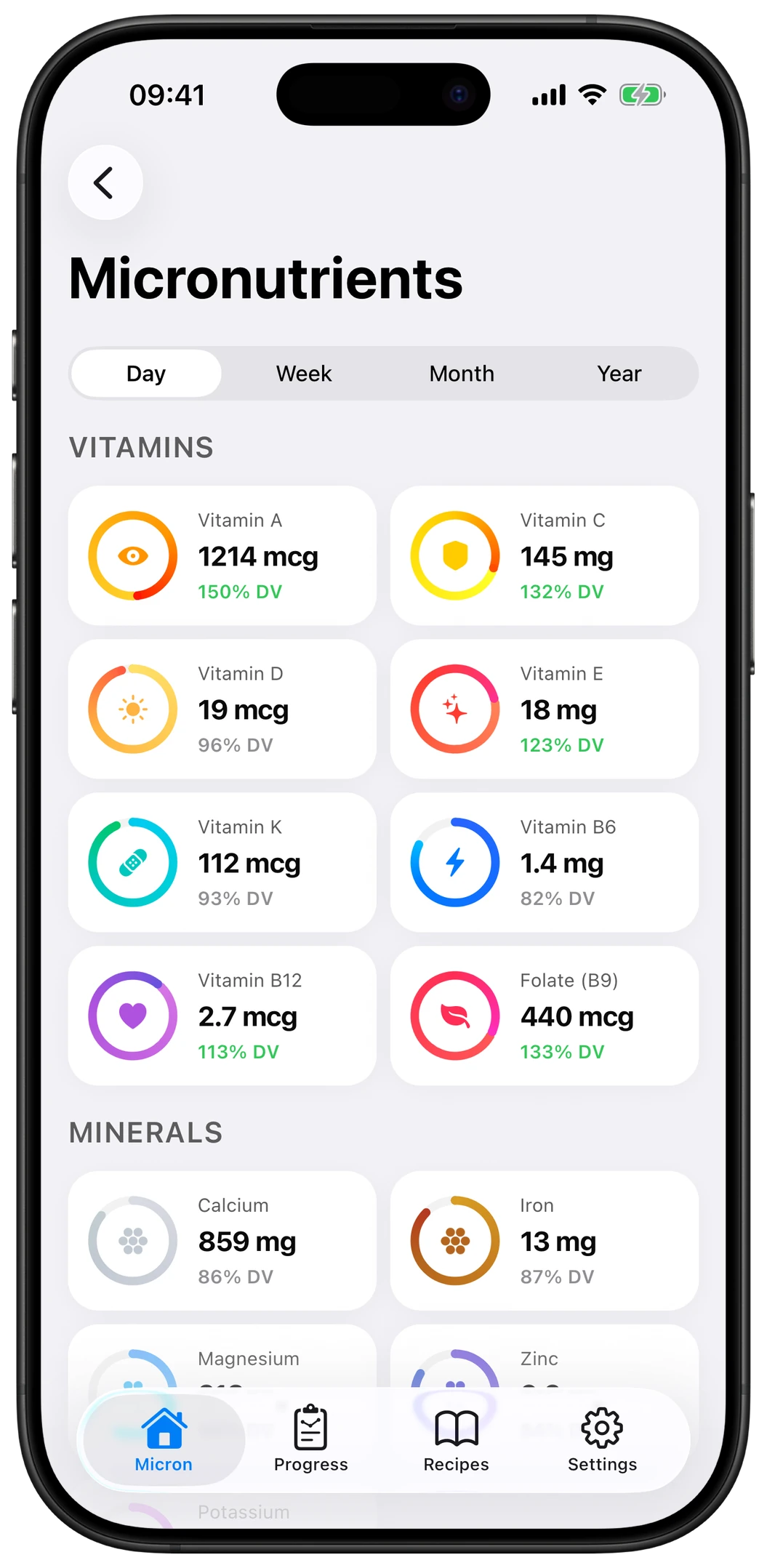
Micron analyzes your meals and tracks 29 nutrients — iron, magnesium, vitamins, omega-3… Every day you see your % of target and what is actually missing.


Frequently asked questions
Which food contains the most vitamin K?
Fresh parsley (1,640 µg/100 g) in absolute terms, but it is eaten by the pinch. On real servings, raw chard (830 µg), cooked spinach (494 µg) and kale (418 µg) dominate. Natto holds the K2 record (~1,000 µg).
Vitamin K1 vs K2: what’s the difference?
K1 from greens mainly serves coagulation; K2 from fermented and animal foods circulates longer and appears more involved in bone and vascular health. Both count — a varied diet provides both.
Can I eat spinach on anticoagulants?
Yes — consistency is what matters. Modern guidance does not ask VKA patients to drop leafy greens, but to keep intake stable so the anticoagulant dose stays calibrated. Report any change of habit to your doctor.
More nutrients to explore
Data sources
Values from the USDA FoodData Central, CIQUAL (ANSES) composition tables and NIH fact sheets. Amounts vary with variety, origin and cooking — read them as reliable orders of magnitude, not lab-grade precision. CIQUAL ↗ · USDA FoodData Central ↗ · NIH ODS ↗
⚠️ This article is for information only and does not replace medical advice. Needs vary with age, sex and situation (pregnancy, conditions, medication): if in doubt or symptomatic, talk to a health professional.