Foods high in vitamin D: the 10 real sources
Let’s be honest: food only covers a fraction of vitamin D needs. But choosing the right foods changes everything — especially from October to March.
Why vitamin D is a special case
Vitamin D drives calcium absorption, bone strength, muscle function and immune modulation. Its quirk: sunlight is the primary supplier, as skin synthesizes it under UVB.
At northern latitudes, skin synthesis is near zero from October to March: food (10-30% of supply in summer) becomes the only natural contributor — and the serious sources fit on one hand.
The ranking: vitamin D per 100 g
Daily target used by Micron: 20 µg per day for an adult.
- 1

Cod liver oil
250µg
> 500%
1 tbsp (13 g)33 µg · 163%
One tablespoon (13 g) is already plenty — nobody eats 100 g.
- 2

Trout (cooked)
19µg
95%
- 3

Wild salmon (cooked)
16.7µg
84%
- 4
Farmed salmon (cooked)
11µg
55%
- 5

Mackerel (cooked)
9.7µg
49%
- 6

Fortified margarine
7.5µg
38%
1 tbsp (10 g)0.75 µg · 4%
Eaten in small amounts: scale the value down to a realistic serving of a few grams.
- 7

Chanterelle mushrooms
5.3µg
27%
1 serving (80 g)4.2 µg · 21%
UV-exposed mushrooms can contain far more.
- 8

Sardines (canned, with bones)
4.8µg
24%
1 serving (60 g)2.9 µg · 14%
- 9

Egg (whole)
2µg
10%
1 piece (50 g)1 µg · 5%
- 10

Tuna (canned in water)
1.4µg
7%
Values per 100 g. Cod liver oil is taken by the spoon (13 g ≈ 34 µg) — already far above the daily target on its own.
How to improve your vitamin D status
- Two servings of oily fish per week (salmon, mackerel, sardines, trout) are the realistic dietary backbone.
- Vitamin D is fat-soluble: eat it within a meal containing fat for proper absorption.
- 15-20 minutes of sun on arms and face, April through September, often covers synthesis — it does not compensate for winter.
- UV-exposed mushrooms (check the label) can exceed 10 µg/100 g: an underrated plant option.
- From October to March, supplementation is commonly recommended across Europe: discuss it with your doctor, especially with darker skin, older age or little sun exposure.
How much vitamin D per day?
Micron uses a target of 20 µg/day (800 IU), consistent with recent recommendations. Many historical references (5-15 µg) are now considered low.
Keep the food orders of magnitude in mind: a salmon portion ≈ 11-17 µg, one egg ≈ 1 µg. Without regular oily fish or sunlight, the math almost never works out.
Track these intakes with Micron
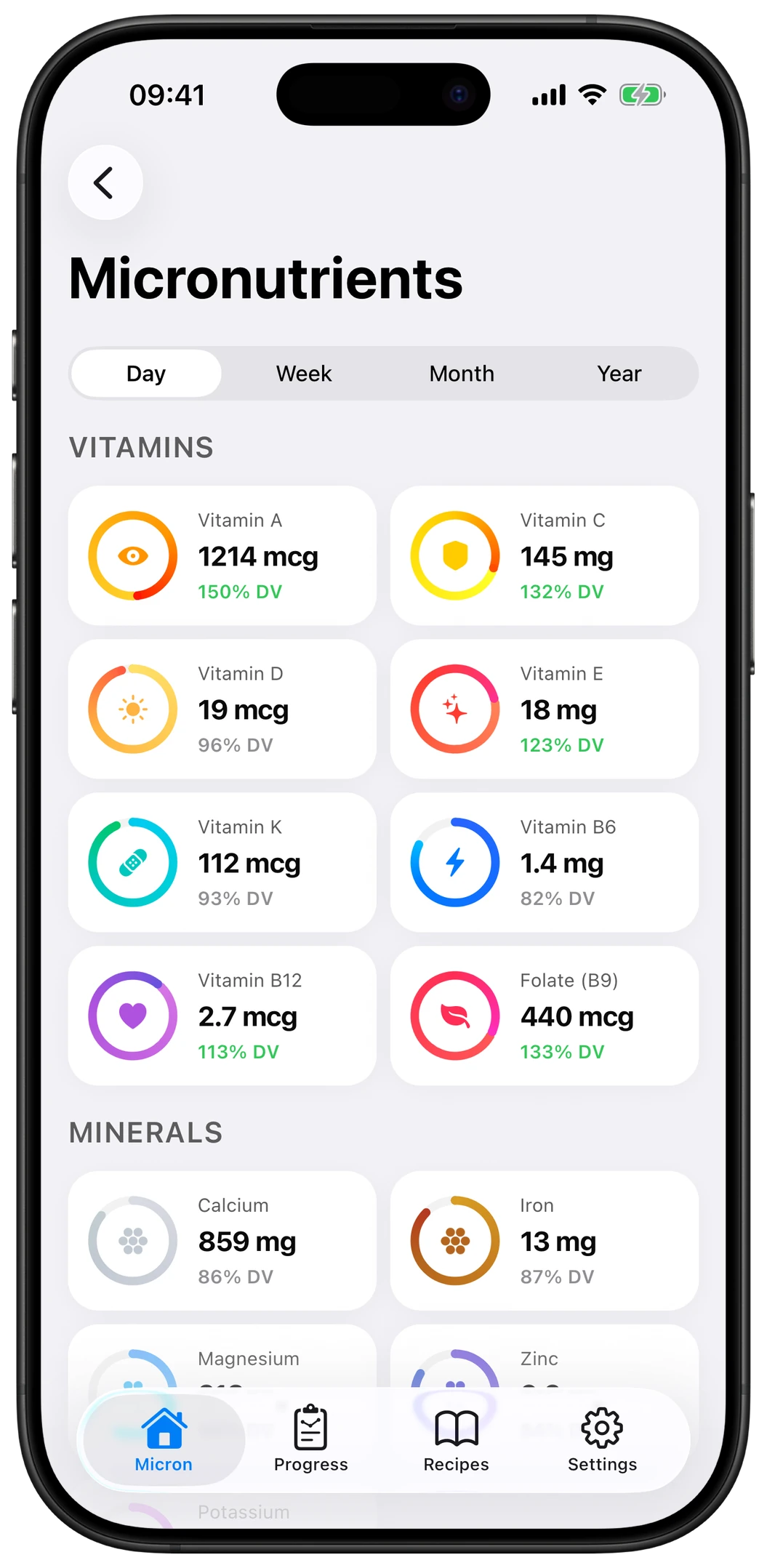
Micron analyzes your meals and tracks 29 nutrients — iron, magnesium, vitamins, omega-3… Every day you see your % of target and what is actually missing.


Frequently asked questions
Which food contains the most vitamin D?
Cod liver oil (250 µg/100 g, ~34 µg per tablespoon), then oily fish: cooked trout (19 µg), wild salmon (16.7 µg), mackerel (9.7 µg). No common plant food competes, apart from UV-exposed mushrooms.
Can you cover vitamin D needs through food alone?
Barely: even with oily fish twice a week, average intake rarely exceeds 5-8 µg/day against a 20 µg target. The realistic trio: regular oily fish + sensible sun exposure April-September + winter supplementation if your doctor advises it.
Are eggs high in vitamin D?
Moderately: about 2 µg/100 g (≈1 µg per egg), concentrated in the yolk. Two eggs bring ~10% of the target — a genuine complement, not a primary source.
More nutrients to explore
Data sources
Values from the USDA FoodData Central, CIQUAL (ANSES) composition tables and NIH fact sheets. Amounts vary with variety, origin and cooking — read them as reliable orders of magnitude, not lab-grade precision. CIQUAL ↗ · USDA FoodData Central ↗ · NIH ODS ↗
⚠️ This article is for information only and does not replace medical advice. Needs vary with age, sex and situation (pregnancy, conditions, medication): if in doubt or symptomatic, talk to a health professional.