Foods high in potassium: the 14 best sources
Potassium is sodium’s natural counterweight: the less processed and more plant-based your diet, the more of it you get. Here is where to find it, numbers included.
Why potassium is strategic
Potassium regulates blood pressure, muscle contraction (heart included) and cellular fluid balance. Together with sodium it forms a duo whose ratio matters more than either value alone — modern diets are far too salty and far too low in potassium.
Raising dietary potassium is one of the best-documented food measures for blood pressure. It lives almost exclusively in minimally processed foods: fruits, vegetables, legumes, tubers.
The ranking: potassium per 100 g
Daily target used by Micron: 3,400 mg per day for an adult.
- 1

Dried apricots
1,162mg
34%
1 serving (30 g)349 mg · 10%
- 2

Tomato paste
1,014mg
30%
1 tbsp (15 g)152 mg · 4%
Eaten in small amounts: scale the value down to a realistic serving of a few grams.
- 3

Pumpkin seeds
809mg
24%
1 tbsp (15 g)121 mg · 4%
Eaten in small amounts: scale the value down to a realistic serving of a few grams.
- 4

Dark chocolate (70-85%)
715mg
21%
1 serving (20 g)143 mg · 4%
- 5

Dates
696mg
20%
1 serving (30 g)209 mg · 6%
- 6

White beans (cooked)
561mg
17%
1 serving (150 g)842 mg · 25%
- 7
Swiss chard (cooked)
549mg
16%
1 serving (150 g)824 mg · 24%
- 8

Baked potato (with skin)
535mg
16%
1 piece (180 g)963 mg · 28%
- 9

Avocado
485mg
14%
- 10

Sweet potato (baked)
475mg
14%
1 serving (150 g)713 mg · 21%
- 11

Spinach (cooked)
466mg
14%
1 serving (150 g)699 mg · 21%
- 12

Salmon (cooked)
384mg
11%
- 13

Lentils (cooked)
369mg
11%
1 serving (150 g)554 mg · 16%
- 14

Banana
358mg
11%
1 piece (120 g)430 mg · 13%
Values per 100 g. Dried fruit concentrates potassium (and sugars): a 30-40 g serving is the right mental unit.
How to raise your potassium intake
- Potassium doesn’t get “boosted”, it accumulates: every serving of vegetables, legumes or fruit adds 200-500 mg to the daily count.
- Boiling leaches potassium (up to -50% for boiled vegetables): steam, roast, or reuse the cooking water.
- A baked potato with its skin is one of the best potassium-per-cost deals around: 535 mg/100 g.
- Cutting ultra-processed foods mechanically improves the sodium/potassium ratio — both curves move the right way at once.
- Kidney disease or potassium-raising medication: increasing potassium must be cleared with your doctor.
How much potassium per day?
Micron uses a target of 3,400 mg/day (the NIH adequate intake for men). EFSA uses 3,500 mg: same order of magnitude — and most adults are far below it.
No calculator panic: 5 servings of fruits and vegetables plus one serving of legumes or potatoes already gets you about two thirds of the way.
Track these intakes with Micron
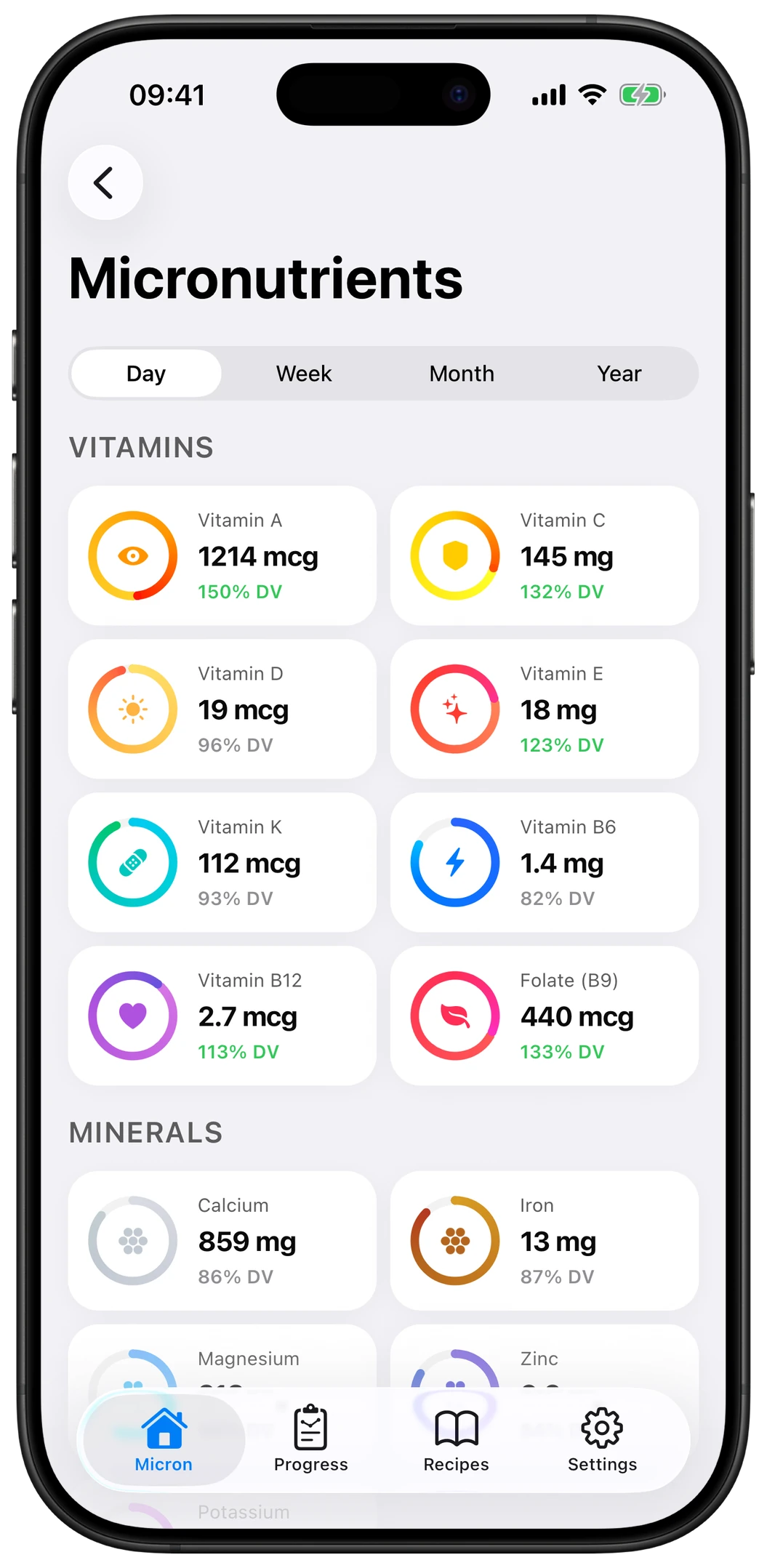
Micron analyzes your meals and tracks 29 nutrients — iron, magnesium, vitamins, omega-3… Every day you see your % of target and what is actually missing.


Frequently asked questions
Which food is highest in potassium?
Dried apricots (1,162 mg/100 g) and tomato paste (1,014 mg) lead, but are eaten in small amounts. On a real plate, white beans, baked potatoes, avocado and spinach are the most effective contributors.
Are bananas the best potassium source?
No — the most famous, not the richest: 358 mg/100 g, less than a baked potato (535 mg), an avocado (485 mg) or cooked spinach (466 mg). Still a practical, athlete-friendly source.
Potassium and blood pressure: what’s the link?
Adequate potassium helps excrete sodium and relaxes blood-vessel walls: studies show a modest but real drop in blood pressure when the sodium/potassium ratio is rebalanced. It is a dietary lever, not a treatment.
More nutrients to explore
Data sources
Values from the USDA FoodData Central, CIQUAL (ANSES) composition tables and NIH fact sheets. Amounts vary with variety, origin and cooking — read them as reliable orders of magnitude, not lab-grade precision. CIQUAL ↗ · USDA FoodData Central ↗ · NIH ODS ↗
⚠️ This article is for information only and does not replace medical advice. Needs vary with age, sex and situation (pregnancy, conditions, medication): if in doubt or symptomatic, talk to a health professional.