Foods high in protein: the 15 best sources
Muscle, satiety, recovery: protein is the macro everyone counts. Here are the densest sources — animal and plant — and the amounts you actually need.
Why protein comes first
Protein supplies the amino acids that build and repair muscle, enzymes, hormones and tissue. In a weight-loss phase it protects muscle mass and drives satiety; in a bulk it is the building material itself.
Unlike carbs and fat, the body has no protein reserve it can tap without breaking down muscle: intake must be daily, and ideally spread across meals.
The ranking: protein per 100 g
- 1

Parmesan
36g
1 serving (30 g)11 g
- 2

Chicken breast (cooked)
31g
1 serving (120 g)37 g
- 3

Pumpkin seeds
30g
1 tbsp (15 g)4.5 g
Eaten in small amounts: scale the value down to a realistic serving of a few grams.
- 4

Lean beef (cooked)
29g
1 serving (120 g)35 g
- 5

Peanuts
26g
1 handful (30 g)7.8 g
- 6

Tuna (canned in water)
25g
- 7

Salmon (cooked)
25g
- 8

Seitan
24g
- 9

Almonds
21g
1 handful (30 g)6.3 g
- 10

Shrimp (cooked)
20g
- 11

Tempeh
20g
- 12

Firm tofu
13g
Content varies with the coagulant used and firmness.
- 13

Egg (whole)
12.6g
1 piece (50 g)6.3 g
- 14

Skyr
10.6g
1 serving (150 g)16 g
- 15

Lentils (cooked)
9g
1 serving (150 g)14 g
Values per 100 g as eaten. Parmesan is dense but eaten 20-30 g at a time; meats and fish remain the most realistic protein servings.
How to optimize your protein intake
- Aim for 20-40 g of protein per meal rather than one massive meal: muscle protein synthesis responds better to spread-out doses.
- Plant proteins complement each other: grains + legumes (rice-lentils, couscous-chickpeas) rebuild a complete amino-acid profile across the day.
- Calorie for calorie, protein is the most satiating macronutrient — the #1 ally of a sustainable calorie deficit.
- Skyr or cottage cheese as a snack is one of the simplest ways to add 10-20 g of protein to your day.
- Quality matters: eggs, dairy, meat, fish and soy have the best amino-acid profiles; rotate them and stop thinking about it.
How much protein per day?
Targets depend on your weight and goal: ~0.8 g/kg if sedentary, 1.6-2.2 g/kg for strength training or a diet phase where you want to keep muscle.
For a number personalized to your weight, activity and goal, use our protein calculator — it does the math in 30 seconds.
Track these intakes with Micron
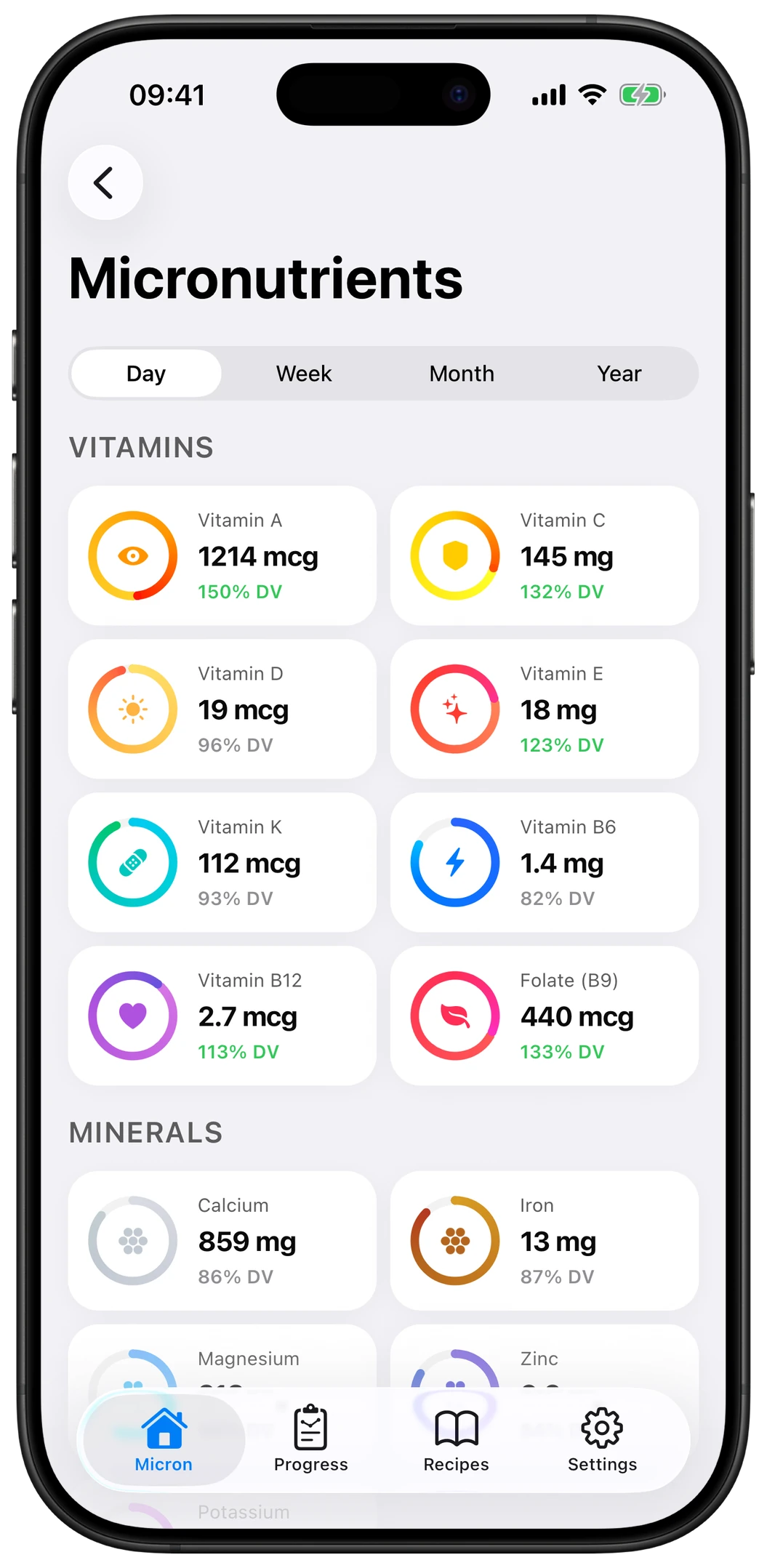
Micron analyzes your meals and tracks 29 nutrients — iron, magnesium, vitamins, omega-3… Every day you see your % of target and what is actually missing.


Frequently asked questions
Which food is highest in protein?
Parmesan (36 g/100 g) edges out cooked chicken breast (31 g) and pumpkin seeds (30 g). On a realistic serving, lean meats, fish and canned tuna remain the most effective sources (25-31 g/100 g).
Can you build muscle on plant protein?
Yes — provided total intake is sufficient (1.6-2.2 g/kg) and sources are varied: soy (tofu, tempeh, edamame), seitan, legumes + grains. Recent studies show no significant difference in gains when quantity and leucine are adequate.
Is too much protein dangerous?
In people with healthy kidneys, intakes up to ~2.2 g/kg/day are considered safe by current evidence. Beyond that, no demonstrated muscle benefit. With kidney disease, protein intake must be medically supervised.
More nutrients to explore
Data sources
Values from the USDA FoodData Central, CIQUAL (ANSES) composition tables and NIH fact sheets. Amounts vary with variety, origin and cooking — read them as reliable orders of magnitude, not lab-grade precision. CIQUAL ↗ · USDA FoodData Central ↗ · NIH ODS ↗
⚠️ This article is for information only and does not replace medical advice. Needs vary with age, sex and situation (pregnancy, conditions, medication): if in doubt or symptomatic, talk to a health professional.