Foods high in folate (vitamin B9): the 13 best sources
The name comes from “folium” — leaf — and the ranking proves it: greens and legumes reign. A nutrient that is critical well beyond pregnancy.
Why folate matters
Vitamin B9 (folate) is essential for cell division and DNA synthesis: red blood cells, tissue renewal, and the development of a fetus’s nervous system. It is THE critical nutrient in early pregnancy.
Outside pregnancy, a shortfall shows up as fatigue, anemia and elevated homocysteine. Food folates are fragile (heat, oxidation), so real intake often falls short of what the menu suggests.
The ranking: folate per 100 g
Daily target used by Micron: 330 µg per day for an adult.
- 1

Chicken liver (cooked)
578µg
175%
Very high in retinol: avoid during pregnancy.
- 2

Sunflower seeds
238µg
72%
1 handful (30 g)71 µg · 22%
- 3

Lentils (cooked)
181µg
55%
1 serving (150 g)272 µg · 82%
- 4

Chickpeas (cooked)
172µg
52%
1 serving (150 g)258 µg · 78%
- 5

Asparagus (cooked)
149µg
45%
1 serving (150 g)224 µg · 68%
- 6

Spinach (cooked)
146µg
44%
1 serving (150 g)219 µg · 66%
- 7

Red kidney beans (cooked)
130µg
39%
1 serving (150 g)195 µg · 59%
- 8

Edamame (cooked)
111µg
34%
1 serving (80 g)89 µg · 27%
- 9

Broccoli (cooked)
108µg
33%
1 serving (150 g)162 µg · 49%
- 10

Avocado
81µg
25%
- 11

Beetroot (cooked)
80µg
24%
- 12

Brussels sprouts (cooked)
60µg
18%
1 serving (150 g)90 µg · 27%
- 13

Egg (whole)
47µg
14%
1 piece (50 g)24 µg · 7%
Values per 100 g. Boiling destroys or leaches up to half of the folate: “cooked” values already reflect that.
How to preserve your folate
- One serving of legumes (lentils, chickpeas) plus one of leafy greens per day covers most of the target.
- Gentle steaming beats prolonged boiling: folates are water-soluble and heat-sensitive.
- Planning a pregnancy: supplementation (400 µg/day) is recommended from the moment contraception stops — food alone cannot secure the neural tube.
- Alcohol is folate’s worst enemy: it cuts absorption and increases losses.
- Raw greens (arugula, lamb’s lettuce, baby spinach) deliver their folate intact — use them.
How much folate per day?
Micron uses a target of 330 µg/day, the European adult reference. Pregnant women or those planning pregnancy: 600 µg via dedicated supplementation.
The target is easy to reach with a generous plant-based diet; it collapses as soon as greens and legumes disappear for a few days.
Track these intakes with Micron
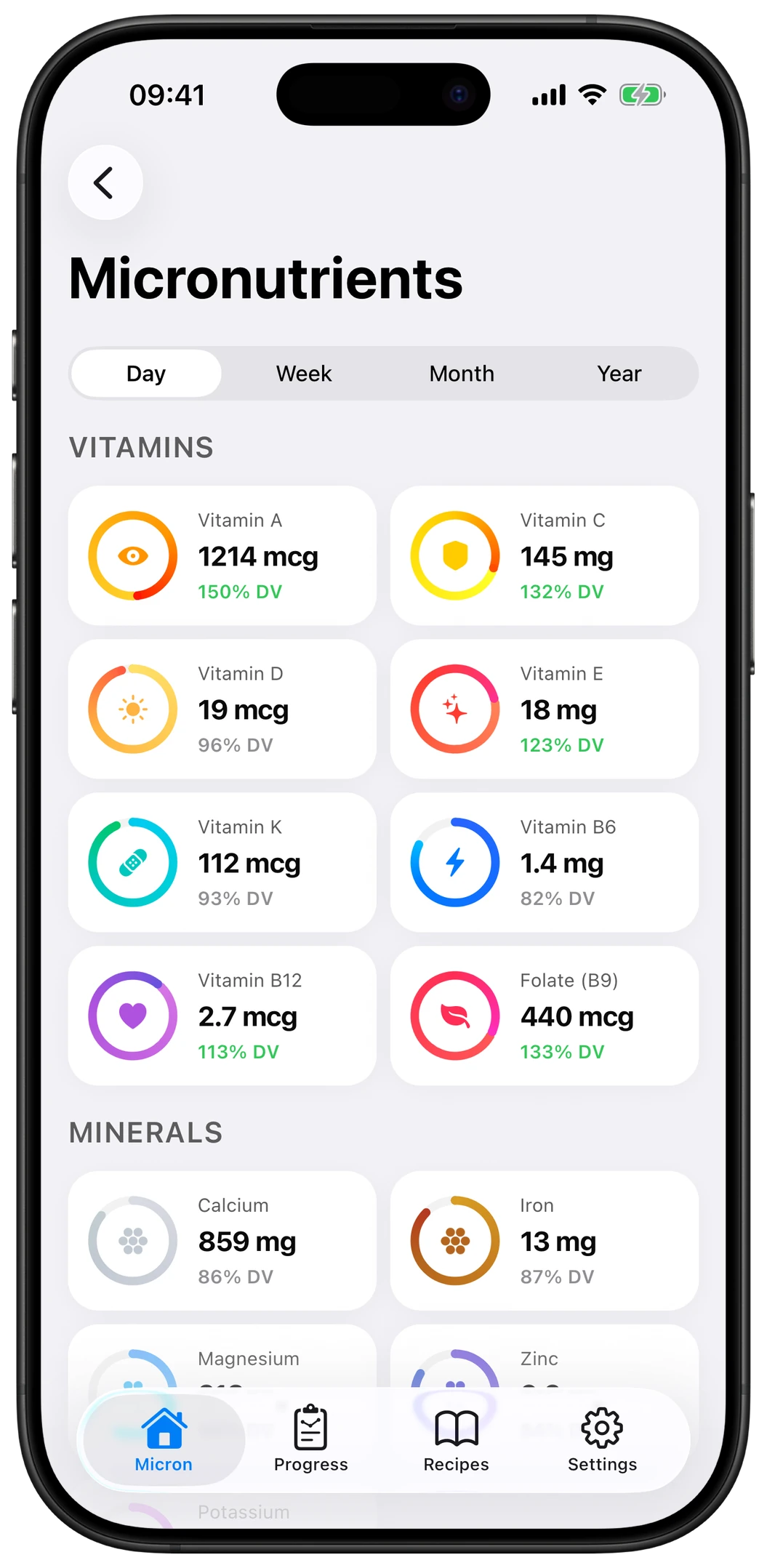
Micron analyzes your meals and tracks 29 nutrients — iron, magnesium, vitamins, omega-3… Every day you see your % of target and what is actually missing.


Frequently asked questions
Which food is highest in vitamin B9?
Chicken liver (578 µg/100 g) leads by far. On the plant side, sunflower seeds (238 µg), cooked lentils (181 µg) and cooked spinach (146 µg) form the realistic everyday podium.
Folate vs folic acid: what’s the difference?
Folate is the natural food form; folic acid is the synthetic form used in supplements and fortified foods, better absorbed but requiring conversion. For everyday eating the distinction barely matters — it mostly counts for supplementation.
Why is folate so critical in early pregnancy?
The fetal neural tube closes within the first 4 weeks — often before the pregnancy is even known. Adequate folate status at that moment sharply reduces the risk of defects (spina bifida), hence supplementation from the planning stage.
More nutrients to explore
Data sources
Values from the USDA FoodData Central, CIQUAL (ANSES) composition tables and NIH fact sheets. Amounts vary with variety, origin and cooking — read them as reliable orders of magnitude, not lab-grade precision. CIQUAL ↗ · USDA FoodData Central ↗ · NIH ODS ↗
⚠️ This article is for information only and does not replace medical advice. Needs vary with age, sex and situation (pregnancy, conditions, medication): if in doubt or symptomatic, talk to a health professional.