Foods high in iron: the 14 best sources
Dietary iron is not created equal: its form (heme vs non-heme) matters as much as the amount. Here is the ranking — and how to absorb more of it.
Why iron is essential
Iron’s first job is building hemoglobin, the red-blood-cell protein that carries oxygen to your muscles and brain. It also drives energy production and immunity. When intake falls short, fatigue shows up long before anemia does — iron deficiency is the most common nutrient deficiency in the world.
Needs differ a lot between people: menstruating women, endurance athletes, growing teenagers and anyone eating little animal produce are the first to fall short.
The ranking: iron per 100 g
Daily target used by Micron: 15 mg per day for an adult.
- 1

Spirulina (dried)
28.5mg
190%
1 tsp (5 g)1.4 mg · 10%
Eaten in small amounts: scale the value down to a realistic serving of a few grams.
- 2

Black pudding (cooked)
22.8mg
152%
- 3

Sesame seeds
14.6mg
97%
1 tbsp (9 g)1.3 mg · 9%
Eaten in small amounts: scale the value down to a realistic serving of a few grams.
- 4

Dark chocolate (70-85%)
11.9mg
79%
1 serving (20 g)2.4 mg · 16%
- 5

Chicken liver (cooked)
11.6mg
77%
Very high in retinol: avoid during pregnancy.
- 6

Pumpkin seeds
8.8mg
59%
1 tbsp (15 g)1.3 mg · 9%
Eaten in small amounts: scale the value down to a realistic serving of a few grams.
- 7

Beef liver (cooked)
6.5mg
43%
Very high in retinol: avoid during pregnancy.
- 8

Firm tofu
5.4mg
36%
Content varies with the coagulant used and firmness.
- 9

Oysters (raw)
5.1mg
34%
1 serving (80 g)4.1 mg · 27%
Varies widely by species and origin.
- 10

Spinach (cooked)
3.6mg
24%
1 serving (150 g)5.4 mg · 36%
- 11

Lentils (cooked)
3.3mg
22%
1 serving (150 g)5 mg · 33%
- 12

Braised beef (chuck)
3.1mg
21%
1 serving (120 g)3.7 mg · 25%
- 13

Sardines (canned, with bones)
2.9mg
19%
1 serving (60 g)1.7 mg · 12%
- 14

Red kidney beans (cooked)
2.2mg
15%
1 serving (150 g)3.3 mg · 22%
Values per 100 g as eaten (cooked when the name says so). For foods eaten in small amounts (spirulina, seeds), scale the number down to a realistic serving.
How to absorb more iron
- Heme iron (meat, fish, organ meats, black pudding) is absorbed at 15-35%, versus 2-20% for plant non-heme iron: gram for gram, animal sources “deliver” more.
- Add a vitamin C source to the meal (citrus, bell pepper, kiwi): it can double or triple the absorption of plant iron.
- Keep tea and coffee away from iron-rich meals: their tannins and polyphenols can cut absorption in half.
- Large amounts of calcium (dairy, supplements) at the same meal also compete: space them out if your iron intake is borderline.
- Soaking and sprouting legumes and grains reduces their phytates, which trap non-heme iron.
How much iron per day?
Micron uses a target of 15 mg/day for an adult. Official references range from 8-11 mg (adult men) to 16-18 mg and more (heavy periods, pregnancy): your real need depends on your profile.
You don’t need to hit 100% to the milligram every single day: what matters is the weekly average and having good sources show up regularly on your plate.
Track these intakes with Micron
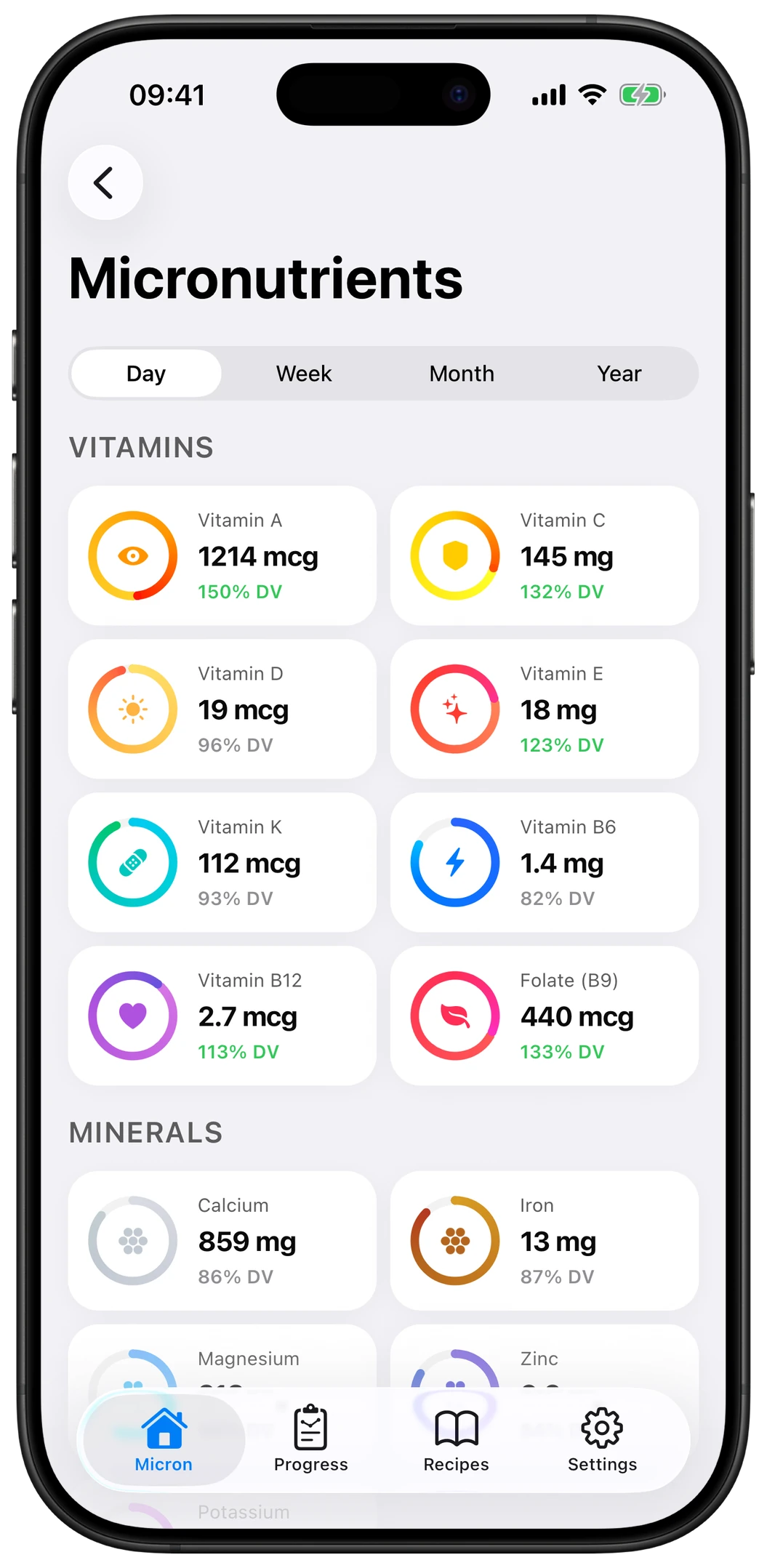
Micron analyzes your meals and tracks 29 nutrients — iron, magnesium, vitamins, omega-3… Every day you see your % of target and what is actually missing.


Frequently asked questions
Which food is highest in iron?
In absolute terms, spirulina (28.5 mg/100 g) and black pudding (22.8 mg/100 g) top the ranking. In practice black pudding is the best realistic source: its heme iron is very well absorbed, while spirulina is eaten a few grams at a time.
Is spinach actually high in iron?
Less than the legend says: 3.6 mg/100 g cooked, non-heme iron with mediocre absorption, further hindered by its oxalates. It is still a useful contributor — especially paired with vitamin C — but far behind organ meats, black pudding or seeds.
How do you cover iron needs as a vegetarian?
Lean on legumes, tofu, seeds (pumpkin, sesame), dark chocolate and whole grains, always paired with a vitamin C source, keeping tea and coffee away from meals. Vegetarian needs are estimated up to 1.8× higher because absorption is lower.
More nutrients to explore
Data sources
Values from the USDA FoodData Central, CIQUAL (ANSES) composition tables and NIH fact sheets. Amounts vary with variety, origin and cooking — read them as reliable orders of magnitude, not lab-grade precision. CIQUAL ↗ · USDA FoodData Central ↗ · NIH ODS ↗
⚠️ This article is for information only and does not replace medical advice. Needs vary with age, sex and situation (pregnancy, conditions, medication): if in doubt or symptomatic, talk to a health professional.