Foods high in vitamin B12: the 12 best sources
B12 has a unique quirk: in useful amounts, it only exists in animal products. The ranking is unambiguous — and so is the message for vegans.
Why B12 is unforgiving
Vitamin B12 is essential for making red blood cells, DNA and the sheath around nerves. An established deficiency causes anemia and neurological damage — sometimes irreversible if it drags on.
The liver stores several years’ worth, which makes deficiency slow and sneaky: by the time symptoms appear, the deficit is already deep. Vegans, strict vegetarians and people over 60 (reduced absorption) are the at-risk profiles.
The ranking: B12 per 100 g
Daily target used by Micron: 2.4 µg per day for an adult.
- 1

Beef liver (cooked)
70µg
> 500%
Very high in retinol: avoid during pregnancy.
- 2
Clams (cooked)
20µg
> 500%
- 3

Mackerel (cooked)
19µg
> 500%
- 4

Mussels (cooked)
17.6µg
> 500%
- 5

Chicken liver (cooked)
16.9µg
> 500%
Very high in retinol: avoid during pregnancy.
- 6

Sardines (canned, with bones)
8.9µg
371%
1 serving (60 g)5.3 µg · 223%
- 7

Salmon (cooked)
3.5µg
146%
- 8

Emmental (Swiss cheese)
3.1µg
129%
1 serving (30 g)0.93 µg · 39%
- 9

Tuna (canned in water)
3µg
125%
- 10

Ground beef (cooked)
2.6µg
108%
1 serving (120 g)3.1 µg · 130%
- 11

Egg (whole)
0.9µg
38%
1 piece (50 g)0.45 µg · 19%
- 12

Semi-skimmed milk
0.5µg
21%
1 glass (250 g)1.3 µg · 52%
Values per 100 g. Organ meat and shellfish values vary by origin; the orders of magnitude are stable.
What to know about B12
- One serving of liver or shellfish per week is enough to refill reserves: B12 stores well, unlike most B vitamins.
- Plant “B12 sources” (spirulina, algae) mostly contain analogues inactive in humans: do not count on them.
- Vegan or near-vegan: supplementation is essential and consensual — it is the only nutrient with no reliable plant-based food source.
- After 60, absorption of food B12 declines (lower stomach acidity): periodic blood checks are wise.
- Long-term metformin and PPIs (acid reducers) lower absorption: mention it to your doctor.
How much B12 per day?
Micron uses a target of 2.4 µg/day, the international adult reference. Pregnancy and breastfeeding raise needs slightly.
The amounts involved are tiny: 100 g of salmon (3.5 µg) already covers more than a day. With regular animal products, the target is easy to hit.
Track these intakes with Micron
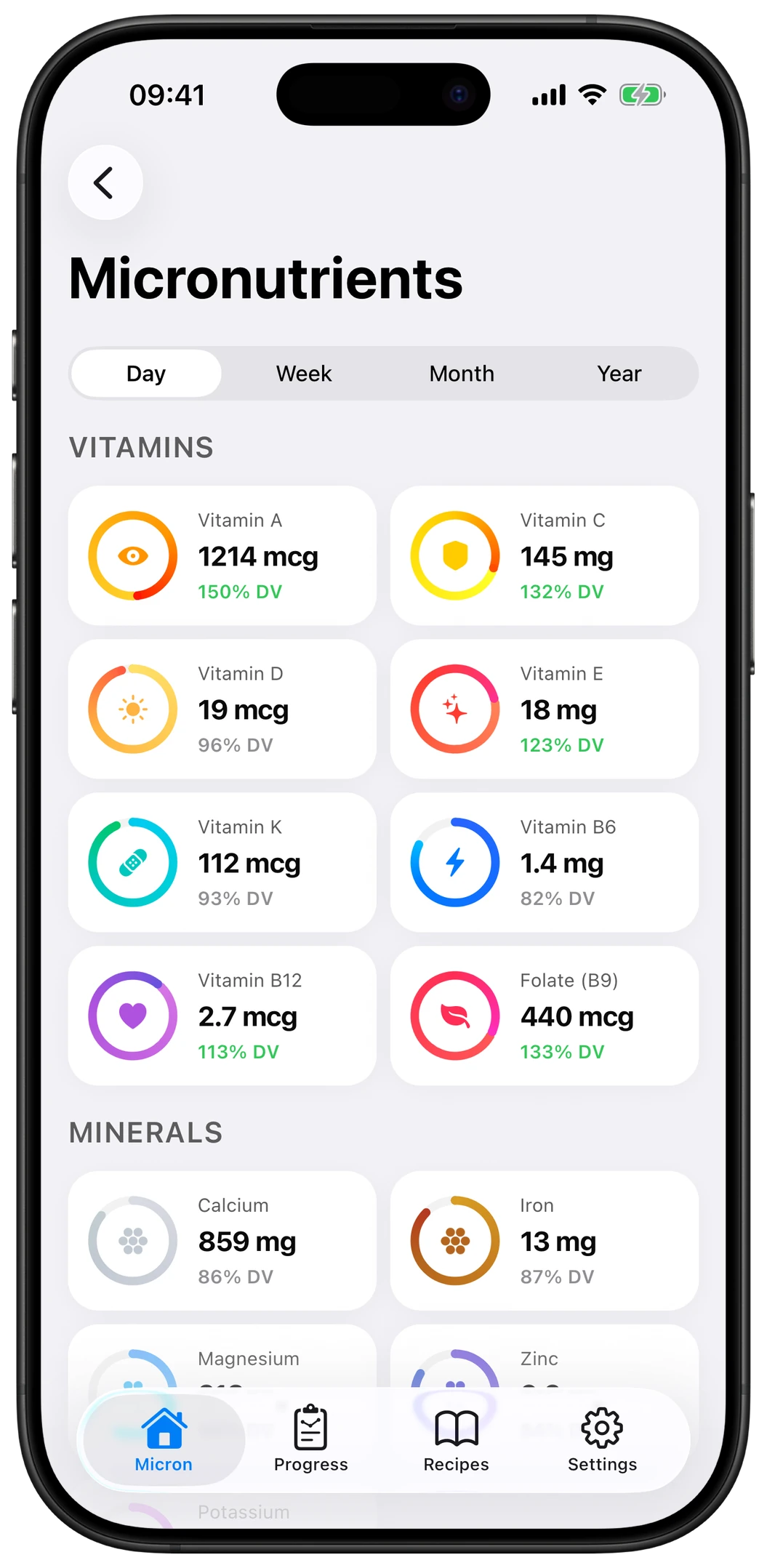
Micron analyzes your meals and tracks 29 nutrients — iron, magnesium, vitamins, omega-3… Every day you see your % of target and what is actually missing.


Frequently asked questions
Which food contains the most vitamin B12?
Beef liver, far ahead: about 70 µg/100 g — nearly 30 times the daily target in one serving. Then come clams (20 µg), mackerel (19 µg) and mussels (17.6 µg).
Where do vegetarians get B12?
Without meat or fish, that leaves eggs (0.9 µg/100 g), cheeses (Emmental: 3.1 µg) and dairy — doable but tight. On a strict vegan diet no reliable plant source exists: supplementation is the only serious option.
Does spirulina provide B12?
No — most of its “B12” is a pseudo-vitamin analogue inactive in humans, which can even distort blood tests. To cover B12 without animal products, only supplements or fortified foods are validated.
More nutrients to explore
Data sources
Values from the USDA FoodData Central, CIQUAL (ANSES) composition tables and NIH fact sheets. Amounts vary with variety, origin and cooking — read them as reliable orders of magnitude, not lab-grade precision. CIQUAL ↗ · USDA FoodData Central ↗ · NIH ODS ↗
⚠️ This article is for information only and does not replace medical advice. Needs vary with age, sex and situation (pregnancy, conditions, medication): if in doubt or symptomatic, talk to a health professional.