Foods high in vitamin B6: the 12 best sources
B6 is the workhorse of protein metabolism: the more protein you eat, the more you use. Pistachios, fish and poultry do most of the heavy lifting.
Why vitamin B6 works backstage
Vitamin B6 (pyridoxine) is a cofactor for about a hundred enzymes, nearly all tied to amino-acid metabolism: making neurotransmitters (serotonin, dopamine, GABA), hemoglobin, and turning dietary protein into tissue.
The logical consequence: needs rise with protein intake. If you are bulking or cutting on a high-protein diet, your needs sit above average.
The ranking: vitamin B6 per 100 g
Daily target used by Micron: 1.7 mg per day for an adult.
- 1

Pistachios
1.7mg
100%
1 handful (30 g)0.51 mg · 30%
- 2

Sunflower seeds
1.35mg
79%
1 handful (30 g)0.41 mg · 24%
- 3

Garlic (raw)
1.24mg
73%
1 piece (5 g)0.06 mg · 4%
Eaten in small amounts: scale the value down to a realistic serving of a few grams.
- 4

Fresh tuna (cooked)
1.04mg
61%
- 5

Beef liver (cooked)
1.03mg
61%
Very high in retinol: avoid during pregnancy.
- 6

Turkey (cooked)
0.8mg
47%
1 serving (120 g)0.96 mg · 56%
- 7

Chicken liver (cooked)
0.75mg
44%
Very high in retinol: avoid during pregnancy.
- 8

Salmon (cooked)
0.7mg
41%
- 9

Chicken breast (cooked)
0.6mg
35%
1 serving (120 g)0.72 mg · 42%
- 10

Baked potato (with skin)
0.5mg
29%
1 piece (180 g)0.9 mg · 53%
- 11

Banana
0.37mg
22%
1 piece (120 g)0.44 mg · 26%
- 12

Avocado
0.26mg
15%
Values per 100 g. Garlic is the textbook case of the per-100 g limit: highly concentrated, but eaten a few grams at a time.
How to cover your B6 needs
- Protein foods (poultry, fish, liver) deliver B6 together with the very protein it helps metabolize — the system self-balances nicely.
- B6 is water-soluble and heat-sensitive: long boiling sacrifices part of it; steaming and short cooking preserve more.
- A handful of pistachios (30 g) brings ~0.5 mg — about 30% of the target, as a snack.
- Vegetarians: potatoes, bananas, avocados, seeds and legumes cover needs without particular difficulty.
- Beware chronic high-dose supplements (>50 mg/day): long-term B6 excess can cause neuropathy — ironic for a “nerve” vitamin.
How much vitamin B6 per day?
Micron uses a target of 1.7 mg/day, the adult reference. Needs rise slightly with age and very high-protein diets.
The target is easy to hit with a varied diet: one serving of fish or poultry + one starchy food + one fruit covers most of the day.
Track these intakes with Micron
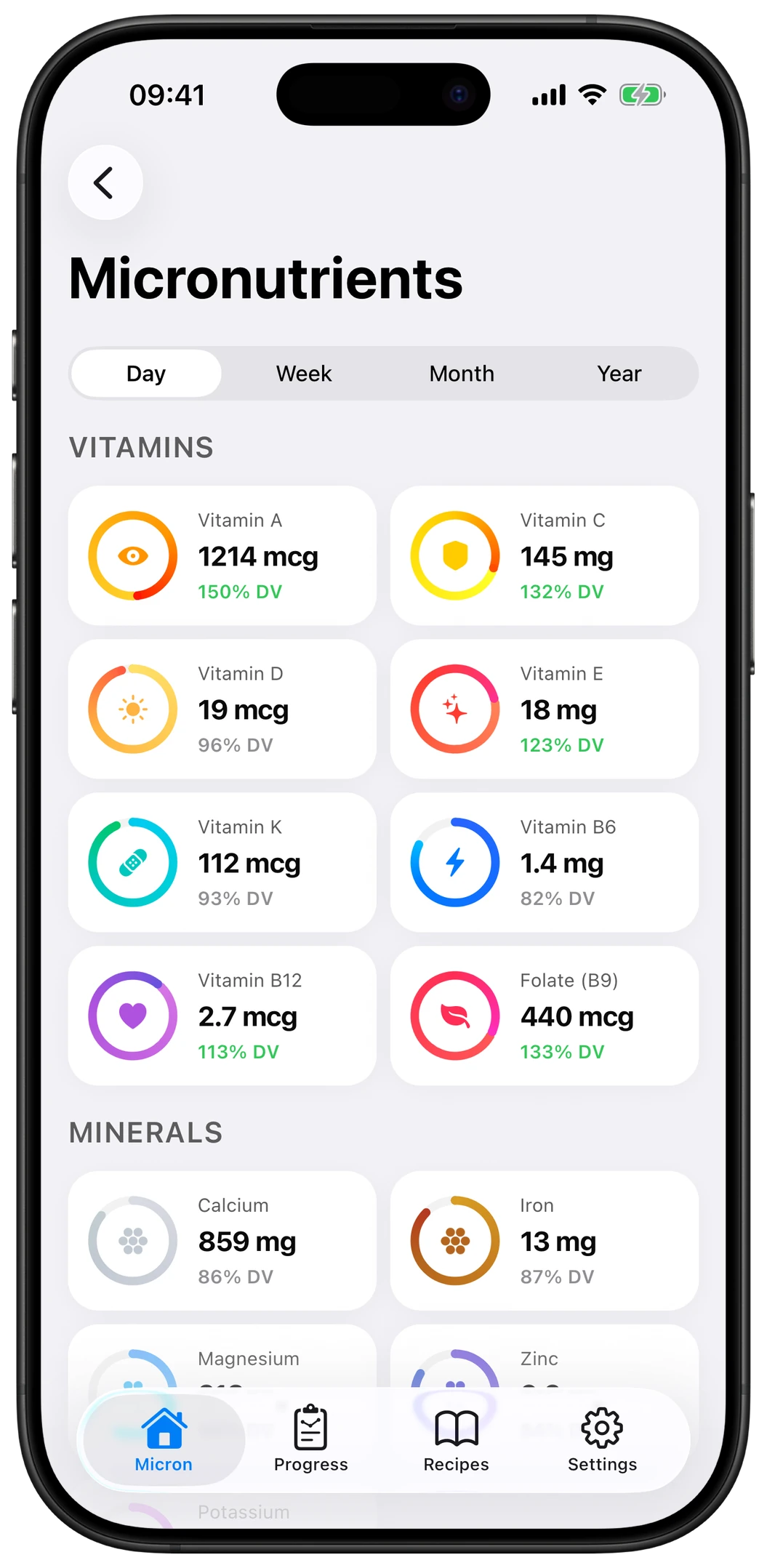
Micron analyzes your meals and tracks 29 nutrients — iron, magnesium, vitamins, omega-3… Every day you see your % of target and what is actually missing.


Frequently asked questions
Which food contains the most vitamin B6?
Pistachios (1.7 mg/100 g) — 100 g covers exactly the daily target. Then sunflower seeds (1.35 mg) and, on the animal side, cooked fresh tuna (1.04 mg) and beef liver (1.03 mg).
Is banana a good B6 source?
Decent without being exceptional: 0.37 mg/100 g, about 22% of the target for a medium banana. Its strength is being eaten raw — no cooking losses.
B6 and PMS: what does the evidence say?
Some trials suggest a modest benefit of B6 (often 40-100 mg/day under medical advice) on certain PMS symptoms, but evidence quality is moderate. Never run such doses long-term unsupervised: chronic excess is neurotoxic.
More nutrients to explore
Data sources
Values from the USDA FoodData Central, CIQUAL (ANSES) composition tables and NIH fact sheets. Amounts vary with variety, origin and cooking — read them as reliable orders of magnitude, not lab-grade precision. CIQUAL ↗ · USDA FoodData Central ↗ · NIH ODS ↗
⚠️ This article is for information only and does not replace medical advice. Needs vary with age, sex and situation (pregnancy, conditions, medication): if in doubt or symptomatic, talk to a health professional.