Foods high in vitamin C: the 14 best sources
The orange doesn’t even make the top 10: bell peppers, blackcurrant, kiwi and brassicas beat it clearly. And since vitamin C hates heat, how you cook matters as much as what you buy.
Why vitamin C is non-negotiable
A major antioxidant, vitamin C drives collagen synthesis (skin, tendons, vessels), supports immune function, and multiplies the absorption of plant iron. The body can neither make nor durably store it: you need some every day.
Full-blown deficiency (scurvy) is rare, but borderline intake is common whenever fresh produce gets scarce — and smoking raises needs by about 20%.
The ranking: vitamin C per 100 g
Daily target used by Micron: 110 mg per day for an adult.
- 1

Acerola cherry
1,677mg
> 500%
1 tbsp (10 g)168 mg · 152%
Eaten in small amounts: scale the value down to a realistic serving of a few grams.
- 2

Guava
228mg
207%
- 3

Yellow bell pepper (raw)
184mg
167%
- 4

Blackcurrant
181mg
165%
1 serving (80 g)145 mg · 132%
- 5

Fresh parsley
133mg
121%
1 tbsp (4 g)5.3 mg · 5%
Eaten in small amounts: scale the value down to a realistic serving of a few grams.
- 6
Red bell pepper (raw)
128mg
116%
- 7

Kiwi
93mg
85%
1 piece (75 g)70 mg · 63%
- 8

Broccoli (raw)
89mg
81%
1 serving (80 g)71 mg · 65%
Boiled, it loses about a third.
- 9

Lychee
72mg
65%
- 10

Brussels sprouts (cooked)
62mg
56%
1 serving (150 g)93 mg · 85%
- 11

Papaya
61mg
55%
1 serving (150 g)92 mg · 83%
- 12

Strawberries
59mg
54%
1 serving (150 g)89 mg · 80%
- 13

Orange
53mg
48%
1 piece (130 g)69 mg · 63%
- 14

Lemon
53mg
48%
1 serving (30 g)16 mg · 14%
Values per 100 g, raw unless stated. Vitamin C is destroyed by heat and oxidation: expect -30 to -50% after boiling.
How to preserve vitamin C
- Eat one raw fruit or vegetable per meal: the most reliable strategy, since raw food keeps its vitamin C intact.
- Short, gentle cooking (steam, wok): prolonged boiling can destroy half the content, which also leaks into the water.
- Cut and juice at the last minute: oxidation starts eating vitamin C as soon as you slice.
- Pair plant iron sources (lentils, tofu) with a vitamin C food: iron absorption can triple.
- Frozen fruits and vegetables keep most of their vitamin C — often better than “fresh” produce stored for a week.
How much vitamin C per day?
Micron uses a target of 110 mg/day, the reference for adults. Smokers, hard-training athletes and infection periods justify a bit more.
One kiwi plus half a red bell pepper already beats the target: it is one of the easiest nutrients to cover… as long as fresh plants are on the menu.
Track these intakes with Micron
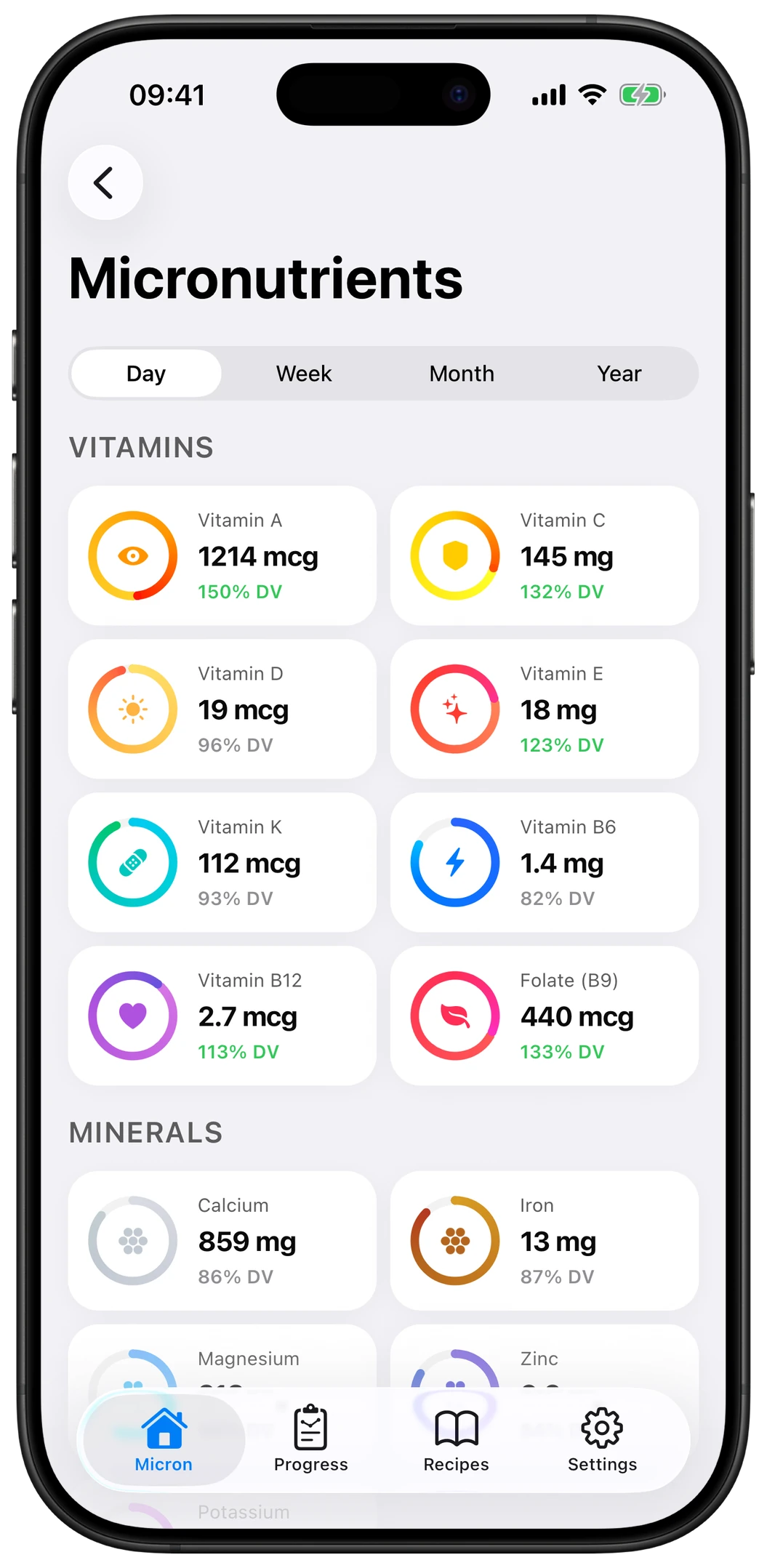
Micron analyzes your meals and tracks 29 nutrients — iron, magnesium, vitamins, omega-3… Every day you see your % of target and what is actually missing.


Frequently asked questions
Which food contains the most vitamin C?
Setting aside acerola (a berry consumed as powder, 1,677 mg/100 g), guava dominates at 228 mg/100 g, followed by raw yellow bell pepper (184 mg) and blackcurrant (181 mg). The orange, at 53 mg, is nowhere near the podium.
Does vitamin C keep you awake?
No — no serious study shows a stimulant effect at food doses. The belief comes from old advertising. You can eat a kiwi at night without fearing for your sleep.
Are vitamin C megadoses useful?
Beyond ~200 mg/day, intestinal absorption saturates and the excess leaves in urine. Covering the target through food remains the validated strategy; very high doses have shown no clear benefit and can irritate the gut.
More nutrients to explore
Data sources
Values from the USDA FoodData Central, CIQUAL (ANSES) composition tables and NIH fact sheets. Amounts vary with variety, origin and cooking — read them as reliable orders of magnitude, not lab-grade precision. CIQUAL ↗ · USDA FoodData Central ↗ · NIH ODS ↗
⚠️ This article is for information only and does not replace medical advice. Needs vary with age, sex and situation (pregnancy, conditions, medication): if in doubt or symptomatic, talk to a health professional.