Foods high in zinc: the 13 best sources
Immunity, skin, testosterone, wound healing: zinc is everywhere, yet your reserves are tiny. Oysters are untouchable — the rest of the ranking is more surprising.
Why zinc is essential
Zinc is a cofactor for more than 200 enzymes: protein and DNA synthesis, immunity, wound healing, taste and smell, hormone production. The body holds no real zinc store, so regular intake is non-negotiable.
Moderate deficiency is common and discreet: repeated infections, slow-healing skin, dulled taste, lifeless hair. Vegetarians, hard-training athletes and people over 60 are the most exposed profiles.
The ranking: zinc per 100 g
Daily target used by Micron: 11 mg per day for an adult.
- 1

Oysters (raw)
16.6mg
151%
1 serving (80 g)13 mg · 121%
Varies widely by species and origin.
- 2

Braised beef (chuck)
8.7mg
79%
1 serving (120 g)10 mg · 95%
- 3

Pumpkin seeds
7.8mg
71%
1 tbsp (15 g)1.2 mg · 11%
Eaten in small amounts: scale the value down to a realistic serving of a few grams.
- 4

Sesame seeds
7.8mg
71%
1 tbsp (9 g)0.7 mg · 6%
Eaten in small amounts: scale the value down to a realistic serving of a few grams.
- 5

Crab (cooked)
7.6mg
69%
1 serving (80 g)6.1 mg · 55%
- 6

Cashews
5.8mg
53%
1 handful (30 g)1.7 mg · 16%
- 7

Beef liver (cooked)
5.3mg
48%
Very high in retinol: avoid during pregnancy.
- 8

Hard cheese (Comté, cheddar…)
4mg
36%
1 serving (30 g)1.2 mg · 11%
- 9

Rolled oats
3.6mg
33%
1 serving (40 g)1.4 mg · 13%
- 10

Dark chocolate (70-85%)
3.3mg
30%
1 serving (20 g)0.66 mg · 6%
- 11

Pork (cooked)
2.9mg
26%
1 serving (120 g)3.5 mg · 32%
- 12

Chicken thigh (cooked)
2.4mg
22%
1 serving (120 g)2.9 mg · 26%
- 13

Lentils (cooked)
1.3mg
12%
1 serving (150 g)2 mg · 18%
Values per 100 g. Oysters vary widely by species and origin — some exceed 30 mg/100 g.
How to absorb more zinc
- Phytates in whole grains and legumes trap zinc: soaking, sprouting and fermentation (sourdough bread) free part of the mineral.
- Animal zinc (meat, seafood, cheese) is absorbed far better than plant zinc: vegetarian needs are estimated up to 50% higher.
- High-dose iron supplements can compete with zinc absorption: separate the doses if that applies to you.
- Six oysters cover several days of needs — even occasional consumption moves the weekly average.
- Regular alcohol increases urinary zinc losses and lowers absorption.
How much zinc per day?
Micron uses a target of 11 mg/day. References range from 8 mg (women) to 14+ mg (hard-training men, phytate-rich diets).
Zinc is a textbook case for tracking: intake swings on a few milligrams, and two ordinary days can differ threefold without anything looking different on the plate.
Track these intakes with Micron
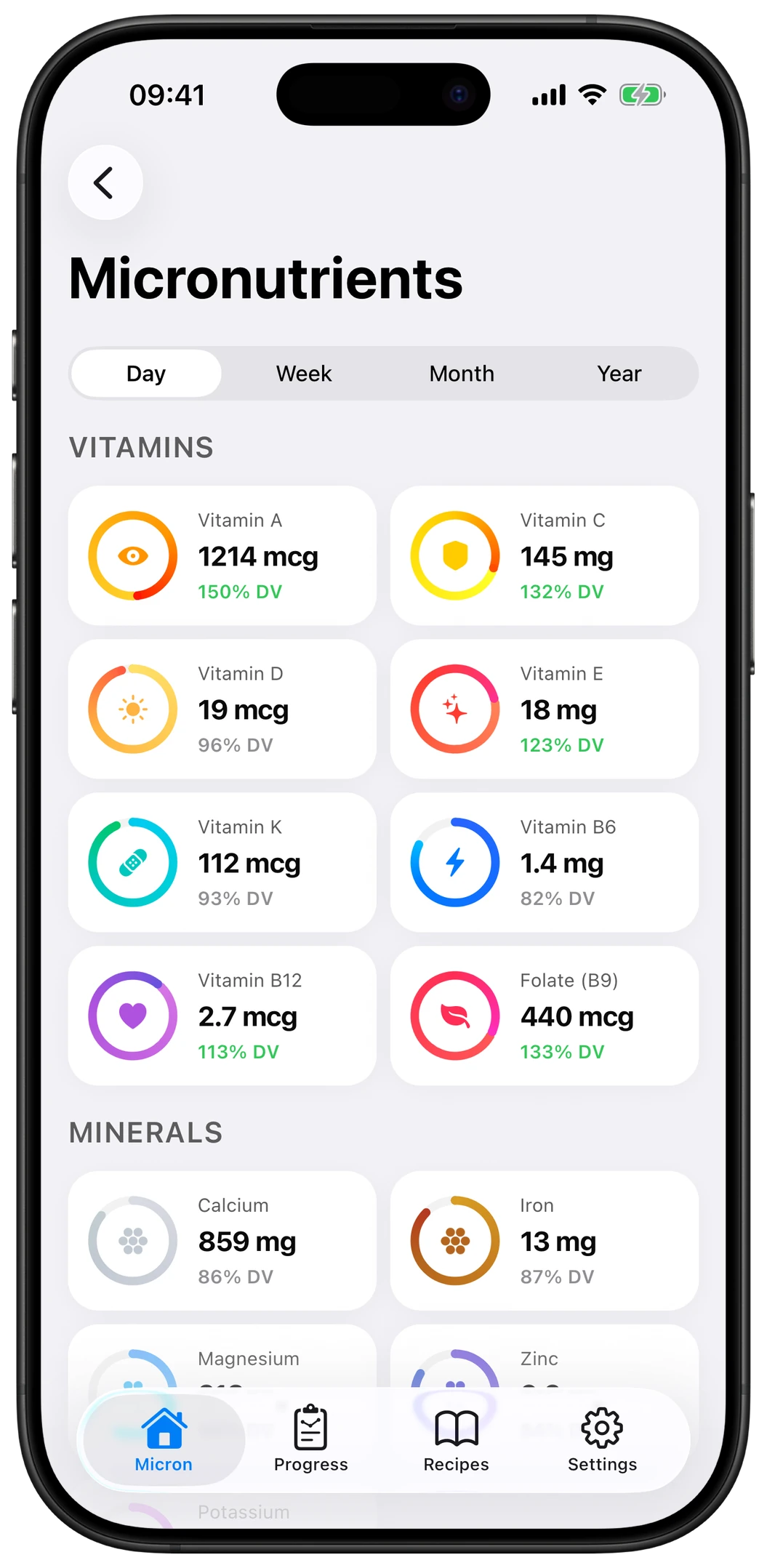
Micron analyzes your meals and tracks 29 nutrients — iron, magnesium, vitamins, omega-3… Every day you see your % of target and what is actually missing.


Frequently asked questions
Which food contains the most zinc?
Oysters, by a mile: 16.6 mg/100 g on average, and far more depending on the species. Six oysters deliver several days’ worth of the target. Behind them, braised beef (8.7 mg) and pumpkin seeds (7.8 mg) lead the pack.
How do you get enough zinc without meat?
Pumpkin and sesame seeds, cashews, oats, legumes and aged cheeses form the base. Soaking and sourdough improve absorption by neutralizing part of the phytates. Aim for the upper end of the intake range.
Zinc and immunity: what do studies say?
Adequate zinc status is required for normal immune function, and correcting a deficit shortens some winter infections. Supplementing beyond needs brings no “bonus” — and chronic excess disrupts copper absorption.
More nutrients to explore
Data sources
Values from the USDA FoodData Central, CIQUAL (ANSES) composition tables and NIH fact sheets. Amounts vary with variety, origin and cooking — read them as reliable orders of magnitude, not lab-grade precision. CIQUAL ↗ · USDA FoodData Central ↗ · NIH ODS ↗
⚠️ This article is for information only and does not replace medical advice. Needs vary with age, sex and situation (pregnancy, conditions, medication): if in doubt or symptomatic, talk to a health professional.