Foods high in omega-3: the 12 best sources
Not all omega-3s are equal: plant ALA and marine EPA/DHA do not deliver the same services. This ranking keeps them apart — the only honest way to rank them.
Why omega-3s get so much attention
Omega-3s are polyunsaturated fatty acids the body cannot make. EPA and DHA (marine) are structural for the brain, retina and inflammation control; ALA (plant) is their precursor — but its conversion to EPA/DHA is weak, often below 10%.
That is why guidelines treat them separately: you need both ALA (rapeseed, flaxseed, walnut oils) and direct EPA/DHA (oily fish) — one does not replace the other.
The ranking: omega-3 per 100 g
Daily target used by Micron: 1.6 g per day for an adult.
Plant sources (ALA)
- 1

Flaxseed oil
53.4g
> 500%
1 tbsp (13 g)6.9 g · 434%
Eaten in small amounts: scale the value down to a realistic serving of a few grams.
- 2

Flaxseeds
22.8g
> 500%
1 tbsp (10 g)2.3 g · 142%
Eaten in small amounts: scale the value down to a realistic serving of a few grams.
- 3

Chia seeds
17.8g
> 500%
1 tbsp (12 g)2.1 g · 134%
Eaten in small amounts: scale the value down to a realistic serving of a few grams.
- 4

Walnuts
9.1g
> 500%
1 handful (30 g)2.7 g · 171%
- 5

Rapeseed (canola) oil
9.1g
> 500%
1 tbsp (13 g)1.2 g · 74%
Eaten in small amounts: scale the value down to a realistic serving of a few grams.
Marine sources (EPA + DHA)
- 1

Cod liver oil
20g
> 500%
1 tbsp (13 g)2.6 g · 163%
One tablespoon (13 g) is already plenty — nobody eats 100 g.
- 2

Salmon (cooked)
2g
125%
- 3

Herring (cooked)
1.7g
106%
- 4

Anchovies (canned)
1.4g
87%
1 serving (10 g)0.14 g · 9%
Eaten in small amounts: scale the value down to a realistic serving of a few grams.
- 5

Mackerel (cooked)
1.2g
75%
- 6

Sardines (canned, with bones)
1.2g
75%
1 serving (60 g)0.72 g · 45%
- 7

Trout (cooked)
0.9g
56%
Plant sources expressed as ALA, marine sources as EPA+DHA — the two columns are not interchangeable (ALA → EPA/DHA conversion < 10%).
How to build your omega-3 intake
- The reference duo: 2 servings of oily fish per week (one being a small species: sardine, mackerel, anchovy — fewer pollutants) + one ALA-rich oil daily.
- Swap your neutral dressing oil for rapeseed (canola): 1 tablespoon ≈ 1.2 g of ALA — most of the target.
- Flaxseeds must be ground to release their ALA (whole, they pass through intact) — keep them refrigerated.
- Omega-3s are fragile: flaxseed and walnut oils are never heated, and live in the fridge.
- Vegans: since ALA → DHA conversion is weak, microalgae oil (direct EPA/DHA) is the validated option to secure status.
How much omega-3 per day?
Micron uses a global target of 1.6 g/day. In practice, references aim for ~1% of energy as ALA (≈2 g) plus 250-500 mg of EPA+DHA — hence the value of watching both families.
Two oily-fish meals a week plus daily rapeseed oil or walnuts tick both boxes for most adults.
Track these intakes with Micron
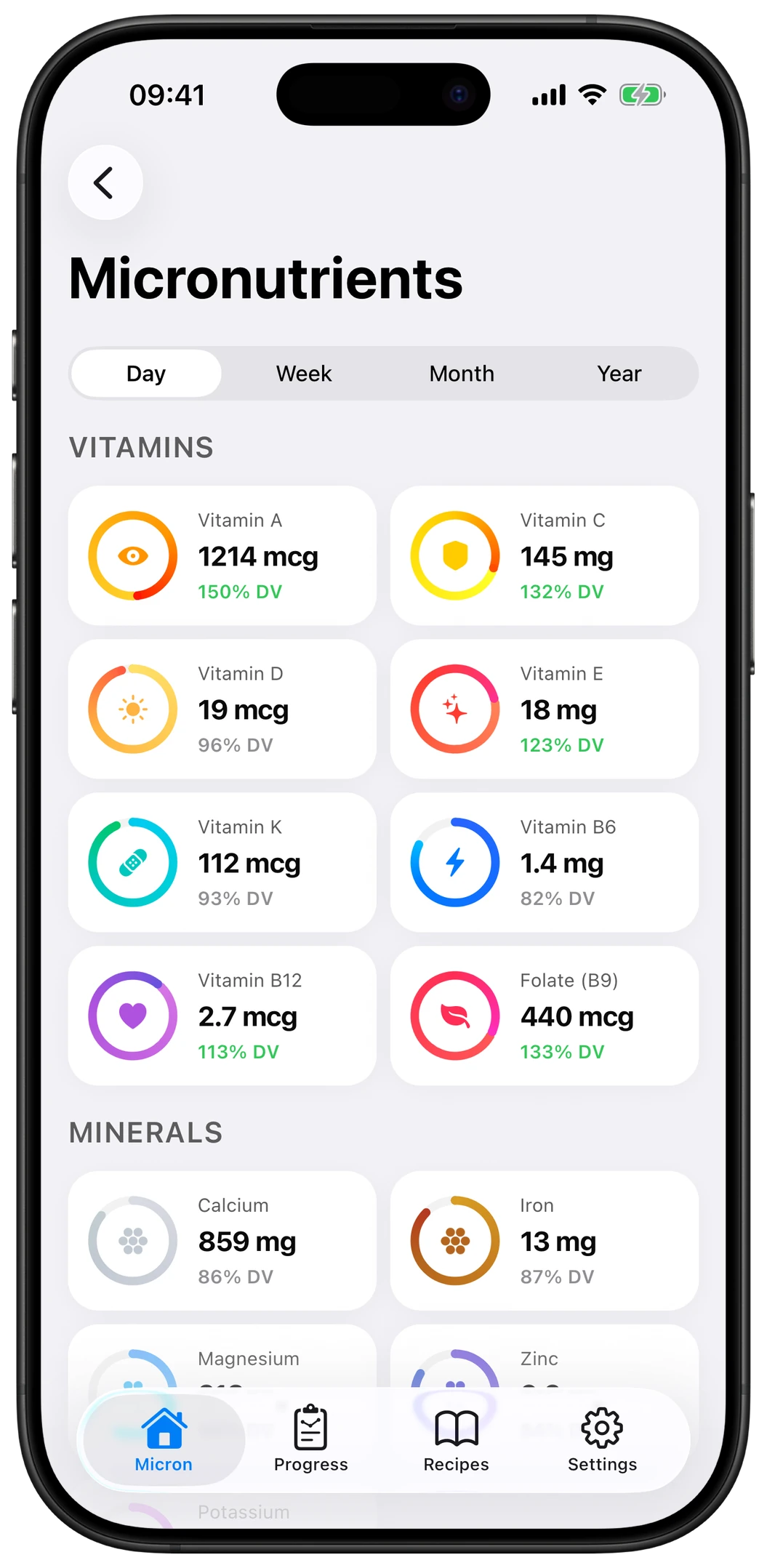
Micron analyzes your meals and tracks 29 nutrients — iron, magnesium, vitamins, omega-3… Every day you see your % of target and what is actually missing.


Frequently asked questions
Which food is highest in omega-3?
Flaxseed oil (53 g of ALA per 100 g, ~6.9 g per tablespoon) on the plant side; at sea, cod liver oil then cooked salmon (~2 g EPA+DHA per 100 g). But ALA and EPA/DHA are not interchangeable — you need both.
Can plant omega-3s replace fish?
Incompletely: conversion of ALA to EPA then DHA runs below 10% (often far less for DHA). Without fish, microalgae oil is the only validated direct EPA/DHA source — the standard recommendation for vegans.
Oily fish and pollutants: how to balance?
Favor small, short-food-chain species (sardine, mackerel, anchovy, herring): they carry fewer heavy metals than big predators (bluefin tuna, swordfish) for just as much omega-3. Two servings a week remains the benefit/risk consensus.
More nutrients to explore
Data sources
Values from the USDA FoodData Central, CIQUAL (ANSES) composition tables and NIH fact sheets. Amounts vary with variety, origin and cooking — read them as reliable orders of magnitude, not lab-grade precision. CIQUAL ↗ · USDA FoodData Central ↗ · NIH ODS ↗
⚠️ This article is for information only and does not replace medical advice. Needs vary with age, sex and situation (pregnancy, conditions, medication): if in doubt or symptomatic, talk to a health professional.