Foods high in vitamin E: the 11 best sources
Vitamin E lives in fat — quality oils, seeds and nuts own the entire ranking. Good news: 30 g of sunflower seeds already takes you two thirds of the way.
Why vitamin E protects
Vitamin E (tocopherols) is the body’s main fat-soluble antioxidant: it shields cell membranes, blood lipids and unsaturated fatty acids from oxidation. A discreet but structural role, notably for the cardiovascular system and skin.
The more polyunsaturated fat you eat (oils, oily fish), the higher your vitamin E needs — conveniently, the foods providing those fats are usually the ones providing vitamin E.
The ranking: vitamin E per 100 g
Daily target used by Micron: 15 mg per day for an adult.
- 1

Wheat germ oil
149mg
> 500%
1 tbsp (13 g)19 mg · 129%
Eaten in small amounts: scale the value down to a realistic serving of a few grams.
- 2

Sunflower oil
41mg
273%
1 tbsp (13 g)5.3 mg · 36%
Eaten in small amounts: scale the value down to a realistic serving of a few grams.
- 3

Sunflower seeds
35mg
233%
1 handful (30 g)11 mg · 70%
- 4

Almonds
26mg
173%
1 handful (30 g)7.8 mg · 52%
- 5

Hazelnuts
15mg
100%
1 handful (30 g)4.5 mg · 30%
- 6

Olive oil
14.4mg
96%
1 tbsp (13 g)1.9 mg · 12%
Eaten in small amounts: scale the value down to a realistic serving of a few grams.
- 7

Pine nuts
9.3mg
62%
1 tbsp (10 g)0.93 mg · 6%
Eaten in small amounts: scale the value down to a realistic serving of a few grams.
- 8

Peanut butter
9.1mg
61%
1 tbsp (15 g)1.4 mg · 9%
Eaten in small amounts: scale the value down to a realistic serving of a few grams.
- 9

Peanuts
8.3mg
55%
1 handful (30 g)2.5 mg · 17%
- 10

Avocado
2.1mg
14%
- 11

Spinach (cooked)
2.1mg
14%
1 serving (150 g)3.2 mg · 21%
Values per 100 g. Oils are consumed by the spoon (10-15 g): one tablespoon of sunflower oil ≈ 6 mg.
How to cover your vitamin E needs
- A handful of sunflower seeds or almonds (30 g) delivers 8-11 mg — more than half the target.
- Rotate your oils: sunflower and wheat germ for vitamin E, rapeseed and olive for the fatty-acid profile. Using them raw preserves everything.
- Vitamin E degrades under repeated heat: don’t reuse frying oil.
- It comes packaged with fat by nature — pair it with a colorful, antioxidant-rich diet: antioxidants work as a network.
- True deficiency is rare, but average intakes sit below the reference: daily seeds and nuts close the gap.
How much vitamin E per day?
Micron uses a target of 15 mg/day, aligned with international adult references.
The everyday winning duo: one tablespoon of quality oil as dressing + one handful of nuts. On its own it covers most of the target.
Track these intakes with Micron
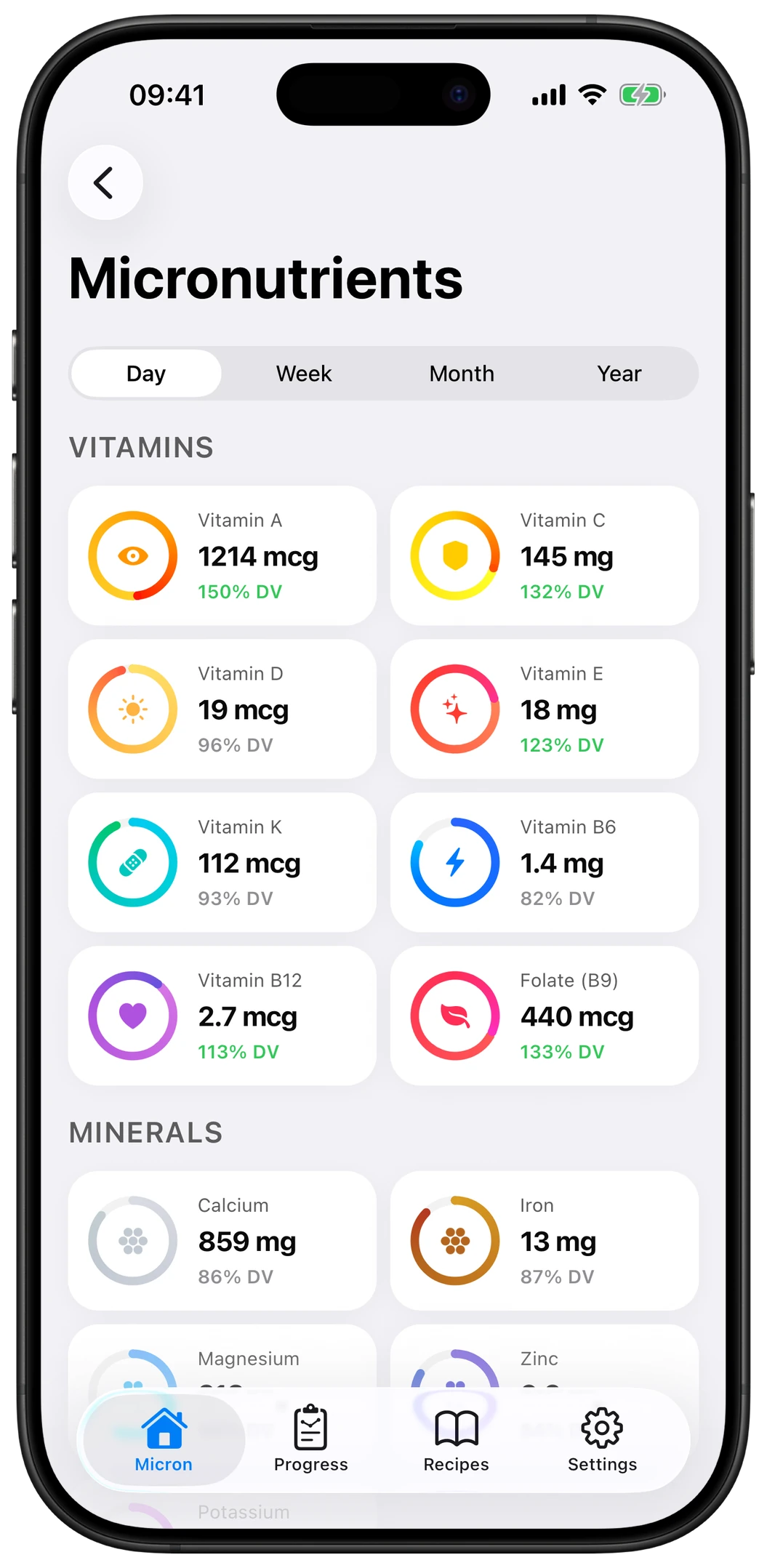
Micron analyzes your meals and tracks 29 nutrients — iron, magnesium, vitamins, omega-3… Every day you see your % of target and what is actually missing.


Frequently asked questions
Which food contains the most vitamin E?
Wheat germ oil crushes the ranking at 149 mg/100 g — one tablespoon covers the daily target. Among whole foods, sunflower seeds (35 mg) and almonds (26 mg) are the champions.
Should you supplement vitamin E?
Not by default: high-dose supplementation trials showed no benefit — some even suggest long-term risks. Covering the target through food (oils, seeds, nuts) remains the only validated strategy.
Is vitamin E good for the skin?
Adequate status helps protect skin cell membranes against oxidative stress — from the inside. For topical application, the evidence is thinner than cosmetic marketing suggests.
More nutrients to explore
Data sources
Values from the USDA FoodData Central, CIQUAL (ANSES) composition tables and NIH fact sheets. Amounts vary with variety, origin and cooking — read them as reliable orders of magnitude, not lab-grade precision. CIQUAL ↗ · USDA FoodData Central ↗ · NIH ODS ↗
⚠️ This article is for information only and does not replace medical advice. Needs vary with age, sex and situation (pregnancy, conditions, medication): if in doubt or symptomatic, talk to a health professional.