Foods high in vitamin A: the 12 best sources
Two worlds coexist: animal retinol, directly usable, and plant beta-carotene, which the body converts on demand. The ranking mixes both — the uses differ.
Why vitamin A is vital
Vitamin A conditions vision (night vision above all), immunity, skin and mucosa health, and cell growth. It comes in two forms: retinol from animal products, and carotenoids from colorful plants, converted to vitamin A as needed.
That conversion is a built-in safety: you cannot overdose on vitamin A by eating carrots. Retinol, however, stores — its strength, and its risk under chronic excess.
The ranking: vitamin A per 100 g (retinol equivalents)
Daily target used by Micron: 750 µg per day for an adult.
- 1

Beef liver (cooked)
9,440µg
> 500%
Very high in retinol: avoid during pregnancy.
- 2

Chicken liver (cooked)
3,980µg
> 500%
Very high in retinol: avoid during pregnancy.
- 3

Sweet potato (baked)
961µg
128%
1 serving (150 g)1,442 µg · 192%
- 4

Carrot (cooked)
852µg
114%
- 5

Butter
684µg
91%
1 tbsp (10 g)68 µg · 9%
Eaten in small amounts: scale the value down to a realistic serving of a few grams.
- 6

Butternut squash (cooked)
558µg
74%
1 serving (150 g)837 µg · 112%
- 7

Spinach (cooked)
524µg
70%
1 serving (150 g)786 µg · 105%
- 8
Swiss chard (cooked)
306µg
41%
1 serving (150 g)459 µg · 61%
- 9

Dried apricots
180µg
24%
1 serving (30 g)54 µg · 7%
- 10

Cantaloupe melon
169µg
23%
1 serving (150 g)254 µg · 34%
- 11

Egg (whole)
160µg
21%
1 piece (50 g)80 µg · 11%
- 12

Red bell pepper (raw)
157µg
21%
Values in retinol activity equivalents (µg RAE) per 100 g: plant figures already account for the beta-carotene conversion rate.
What to know about vitamin A
- Beta-carotene is fat-soluble: a drizzle of oil on carrots or sweet potato multiplies its absorption.
- Gentle cooking improves the bioavailability of plant beta-carotene (cell walls open up) — one of the rare nutrients that cooking helps.
- Liver is so concentrated that one monthly serving already weighs heavily in your intake.
- Pregnancy: cap retinol (no liver, caution with supplements) — excess is teratogenic. Plant beta-carotene stays risk-free.
- A colorful plate (orange, red, dark green) is the best visual proxy for carotenoid intake.
How much vitamin A per day?
Micron uses a target of 750 µg/day (650 µg for women), in retinol equivalents. European references are identical.
In practice: 100 g of sweet potato or cooked carrots already covers the day’s target via beta-carotene — with zero overdose risk.
Track these intakes with Micron
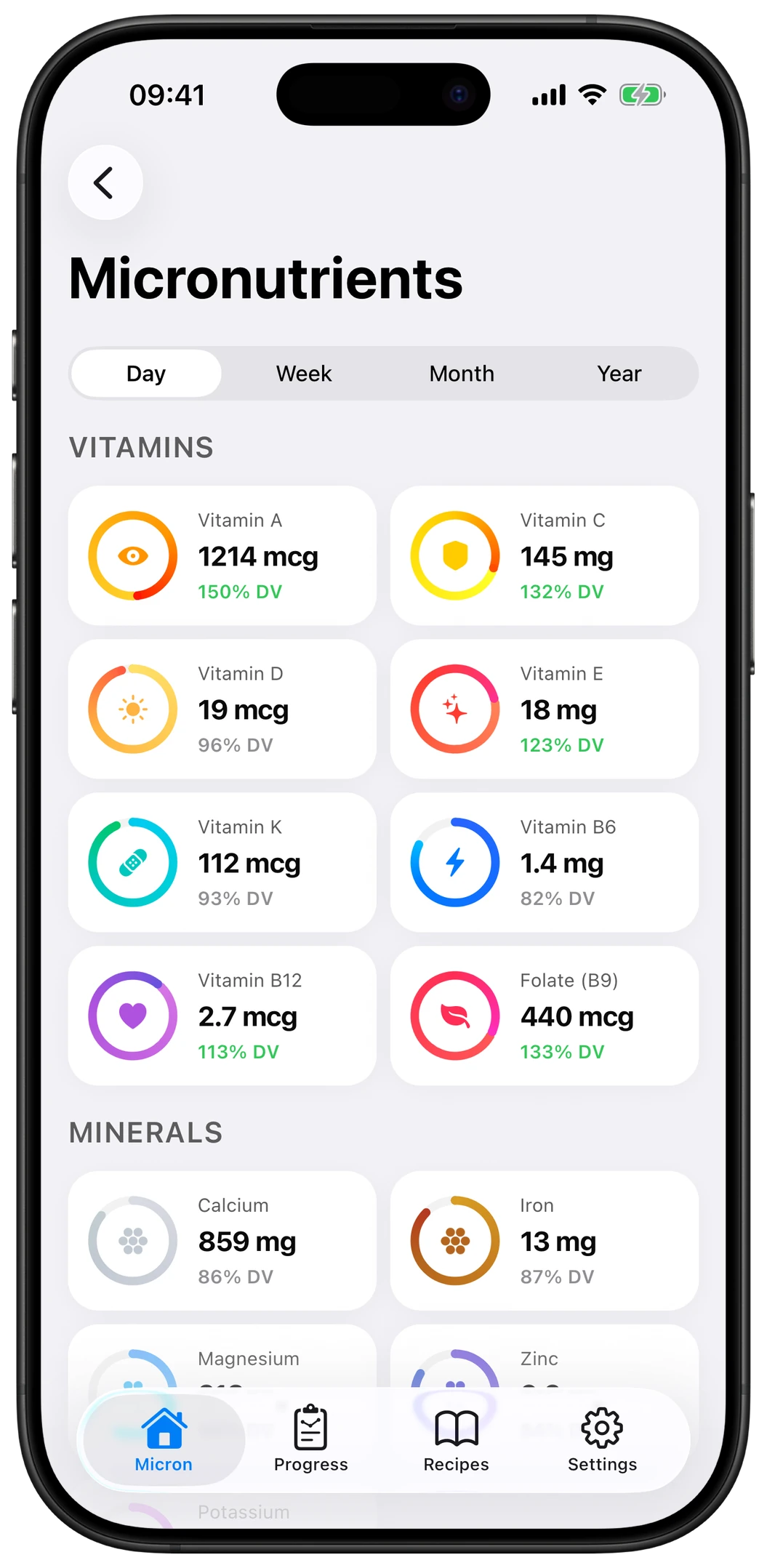
Micron analyzes your meals and tracks 29 nutrients — iron, magnesium, vitamins, omega-3… Every day you see your % of target and what is actually missing.


Frequently asked questions
Which food contains the most vitamin A?
Beef liver, in a league of its own: 9,440 µg/100 g — over 12 times the daily target. That is also why it is discouraged during pregnancy. On the plant side, sweet potato (961 µg) and cooked carrots (852 µg) dominate via beta-carotene.
Do carrots really improve eyesight?
Partly: their beta-carotene maintains night vision and retinal health — correcting a deficit genuinely improves dusk vision. No carrot will fix myopia though: that myth comes from a 1940 British propaganda campaign.
Can you lack vitamin A in Europe or the US?
Rare but possible: very restrictive diets, fat malabsorption (digestive diseases), or a diet poor in both colorful plants AND animal products. First signs: degraded night vision, dry skin, repeated infections.
More nutrients to explore
Data sources
Values from the USDA FoodData Central, CIQUAL (ANSES) composition tables and NIH fact sheets. Amounts vary with variety, origin and cooking — read them as reliable orders of magnitude, not lab-grade precision. CIQUAL ↗ · USDA FoodData Central ↗ · NIH ODS ↗
⚠️ This article is for information only and does not replace medical advice. Needs vary with age, sex and situation (pregnancy, conditions, medication): if in doubt or symptomatic, talk to a health professional.